What is the Porsche IMS?
- Date
- Words
- Enric Godes
The first generation of the 996/986 series, the M96 and later the M97, has a mechanical weakness in the IMS, the bearing that supports the intermediate shaft.
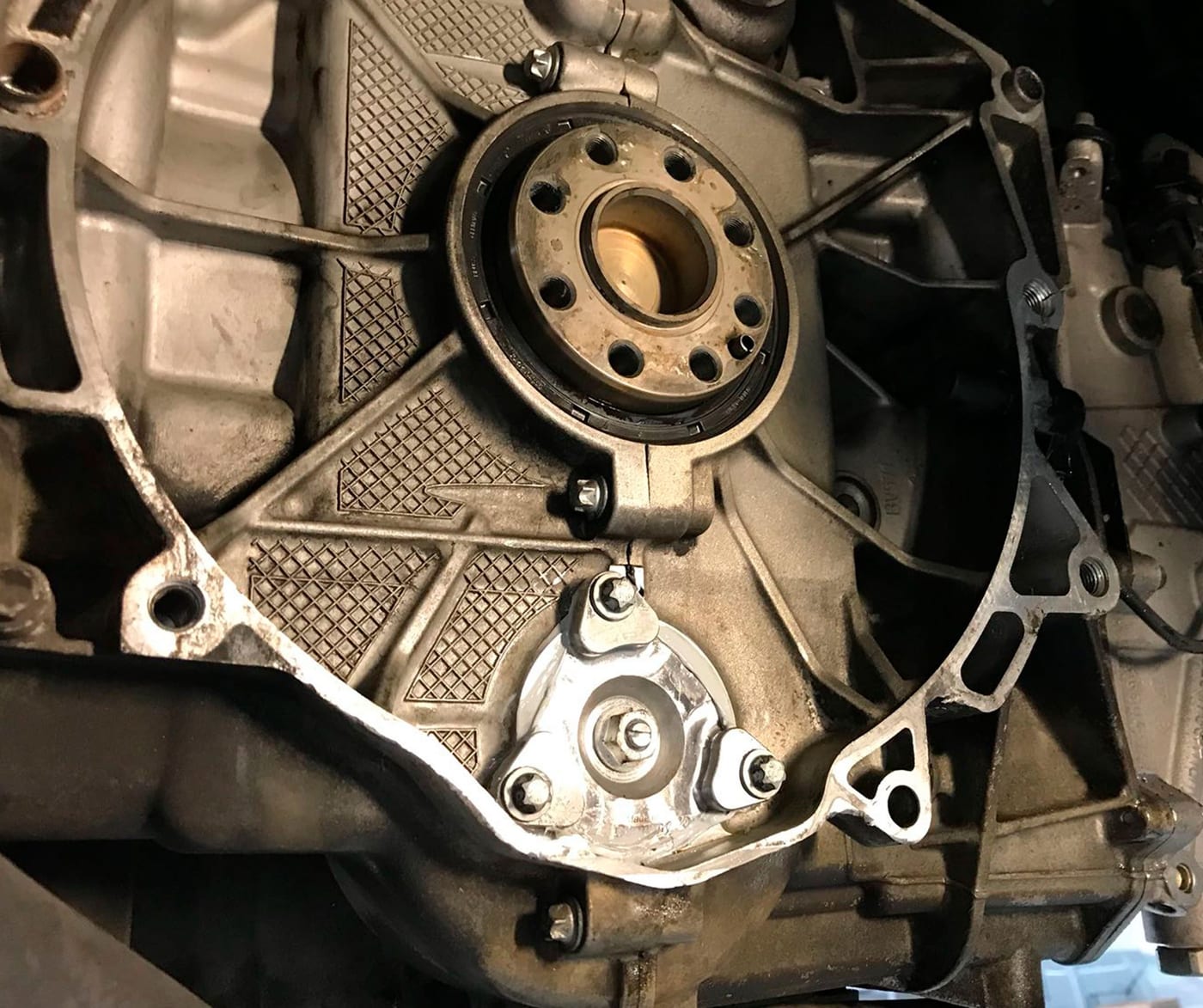
Detail of the IMS on a Porsche engine
The Intermediate Shaft, better known as the IMS, is the bearing that supports the intermediate shaft and transmits movement to the chains running to each cylinder head.
The intermediate shaft is a component found in some Porsche models, used to transmit engine power to the car’s transmission. It sits between engine and transmission and helps transfer power to the driveline. It is an important part of Porsche engine design and plays a decisive role in how the car performs.
The models after the 911 993 moved from air cooling to water cooling, watercooled: the first generation of the 996/986 series, the M96 and later the M97.
The single-row 6204DDUC3 bearings of the first generation, used between 2000 and 2005, have a greater mechanical weakness than either of the other two generations.
There have been three generations of IMS intermediate shafts in total, from 1997 to 2008.
The double-row bearings belonged to the first generation, between 1997 and 2000; the first engine to use one was that of the Boxster Standard 2.5.
The third generation, between 2006 and 2008, used a larger-diameter bearing integrated into the intermediate shaft.
The affected years run from 1997 to 2008: the whole 986, 987 and 996 generation with M96 engines, and the 997 with M97 engines.
From the 997.2 in 2008 the problem was fully resolved.
“If the intermediate bearing fails, the shaft comes loose, the chains drop and the engine can be destroyed. That is why the condition of the IMS has to be checked periodically. Poor oil quality affects the seal of the bearing and causes the final failure. Shortening oil change intervals and using a first-rate synthetic lubricant is decisive. We strongly recommend an annual service, or every 10,000 km, and every six months where possible. Oil becomes contaminated inside the engine, mainly with water and fuel.”
— Jordi Edo
In the watercooled engines mentioned above, Porsche fitted a double-row steel ball bearing in the MKI and a single-row bearing in the MKII.
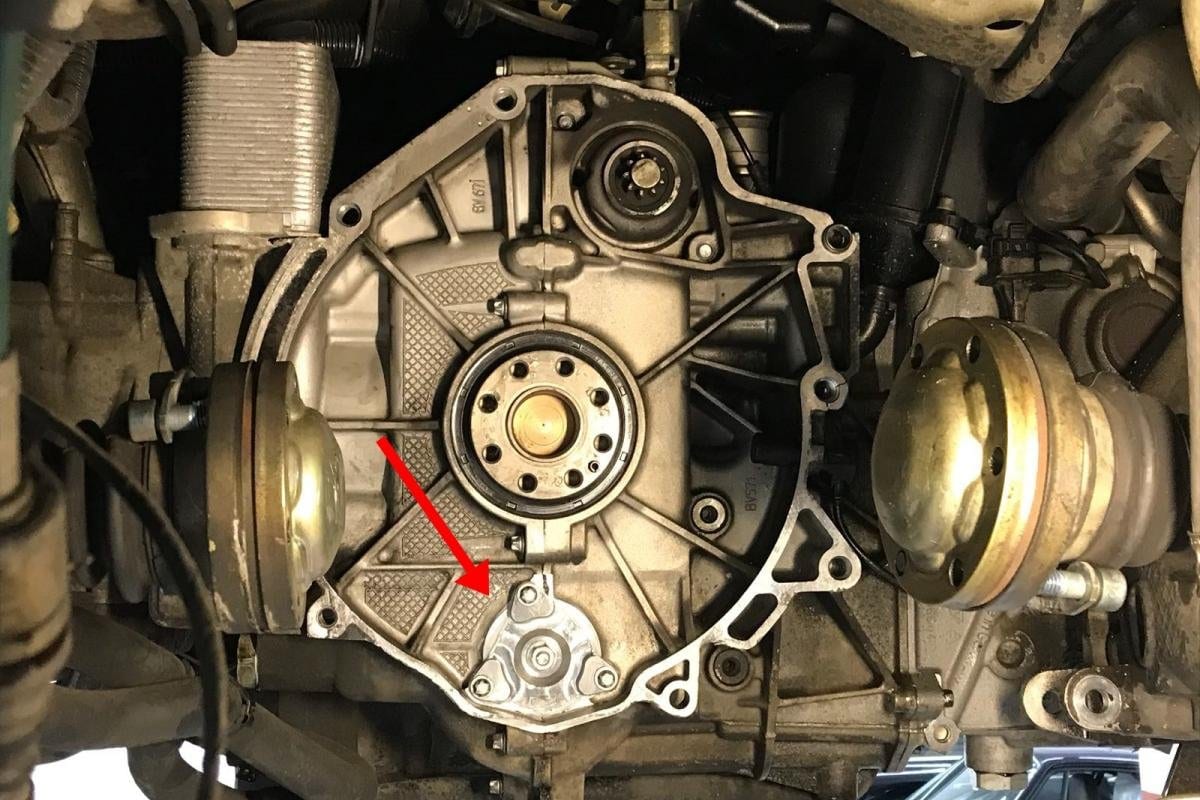
IMS location* The arrow marks the position of the bearing*
Video explaining the IMS
In the following video our managing director, Jordi Edo, explains in detail what the problem with the IMS is and the solutions we propose at Valentin Motors.
Which cars are affected?
Broadly, the affected engines are the M96 from 1998 to 2004, the M97 from 2004 to 2008, and every Boxster and Cayman 986 and 987.
From 1997 to 2008 in total.
Specifically, the following cars:
996 generation 911 Carrera, Carrera S, Carrera 4 and Carrera 4S
**997 generation (up to 2008)**911 Carrera, Carrera S, Carrera 4 and Carrera 4S
986 generationBoxster and Boxster S
**987 generation (up to 2008)**Boxster and Boxster S, Cayman and Cayman S
How and when does the IMS fail?
There is no specific mileage. It can happen with the engine at high or low revs. It happens instantly and it is irreversible. On top of that, the wear cannot be detected without a direct inspection.
Oil is critical: its quality and how often it is renewed.
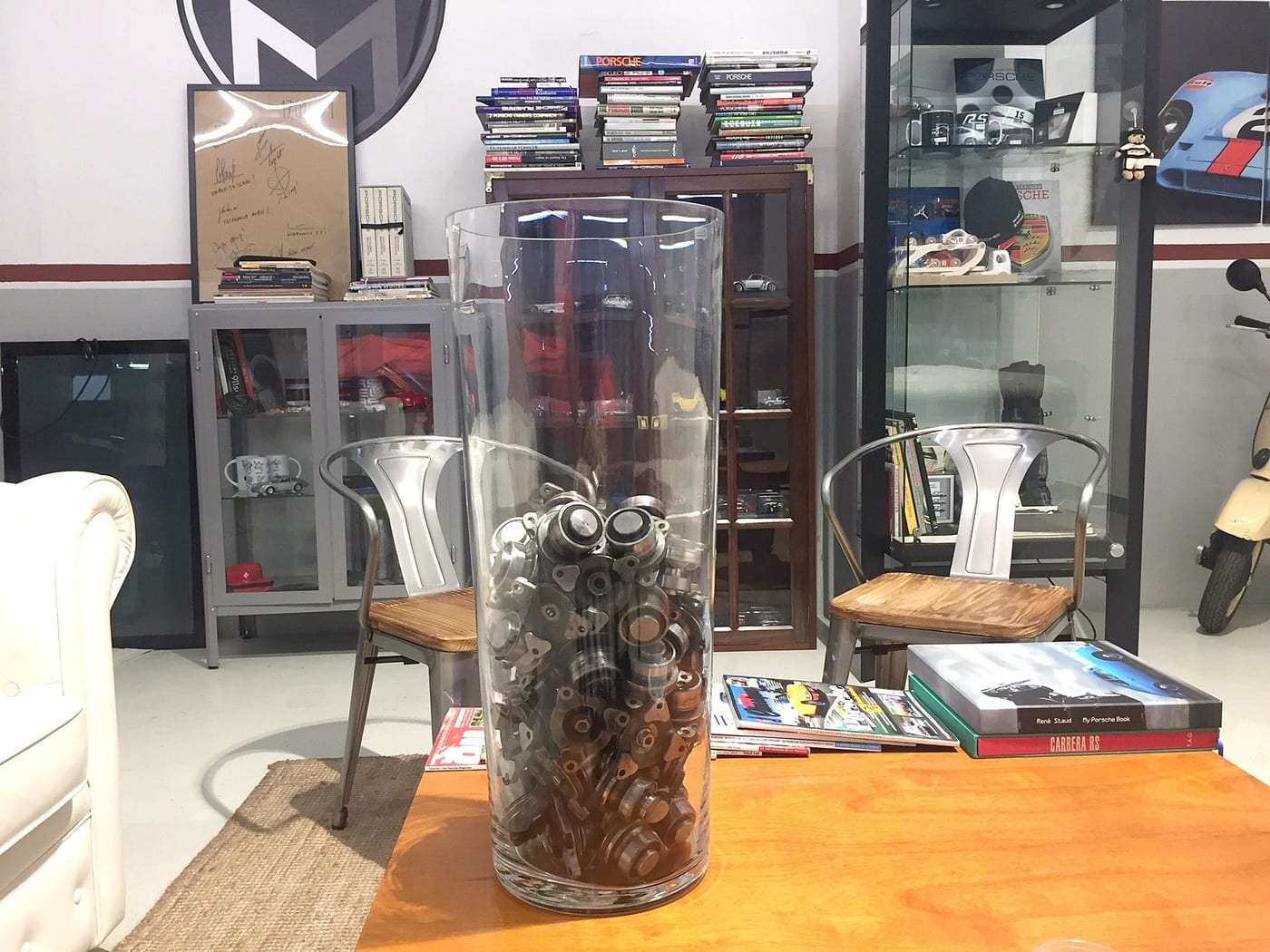
Our experience* As the image shows, we have replaced a great many IMS units: close to 320 jobs since 2005.*
That is why at Valentin Motors we offer an IMS condition check.
Unfortunately, if a car is affected there is no way of avoiding it. The one preventive measure is to keep to the maintenance schedule.
From our experience, we recommend changing the oil every 10,000 km or once a year. That lets us keep track of the condition of the car and keep the engine in good order.
Every six months would be ideal, since oil becomes contaminated inside the engine by fuel and coolant.
What is the solution if my car is affected?
First of all, diagnose the engine. Once it is confirmed that the car is affected, replace the IMS bearing with a reinforced one, which then has to be inspected every 20,000 km or four years from fitting.
We know this is a job customers sometimes hesitate over. But set against the cost of rebuilding an engine, it is one we recommend without reservation.
Read this article on the repair of an engine after an IMS failure