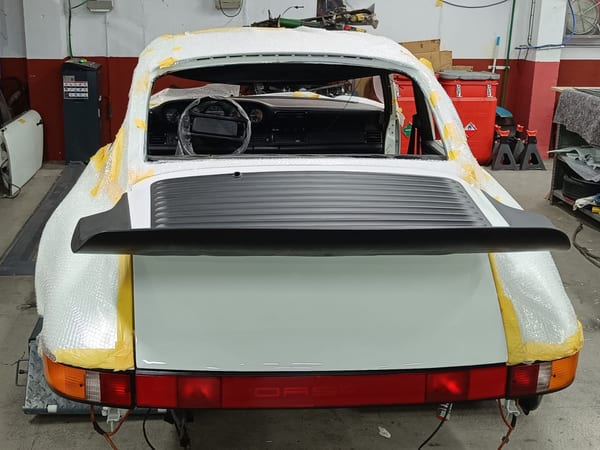
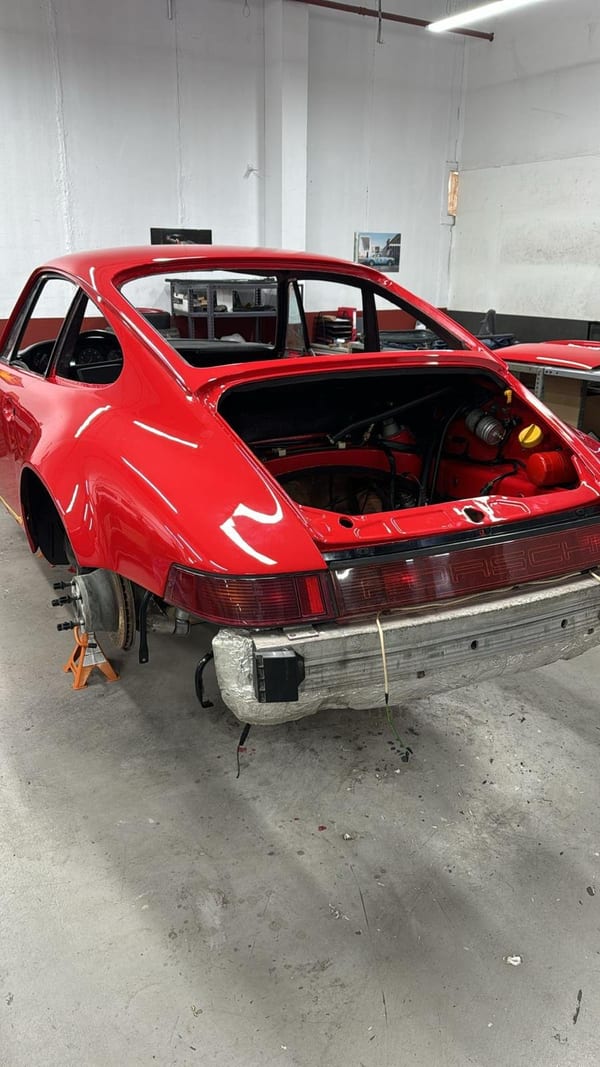
Porsche bodywork and paint with comprehensive preparation
Preparation is the key to the job
Before painting, we measure the gaps at every opening, remove trim pieces rather than masking them off, and catalog every component removed from the car to ensure it is returned to its correct position. Chrome parts requiring attention are refurbished while the body is in the spray booth.
We apply anti-corrosion treatment to the areas that require it—which, on a classic Porsche, are always the same spots and always the ones that remain hidden from view.
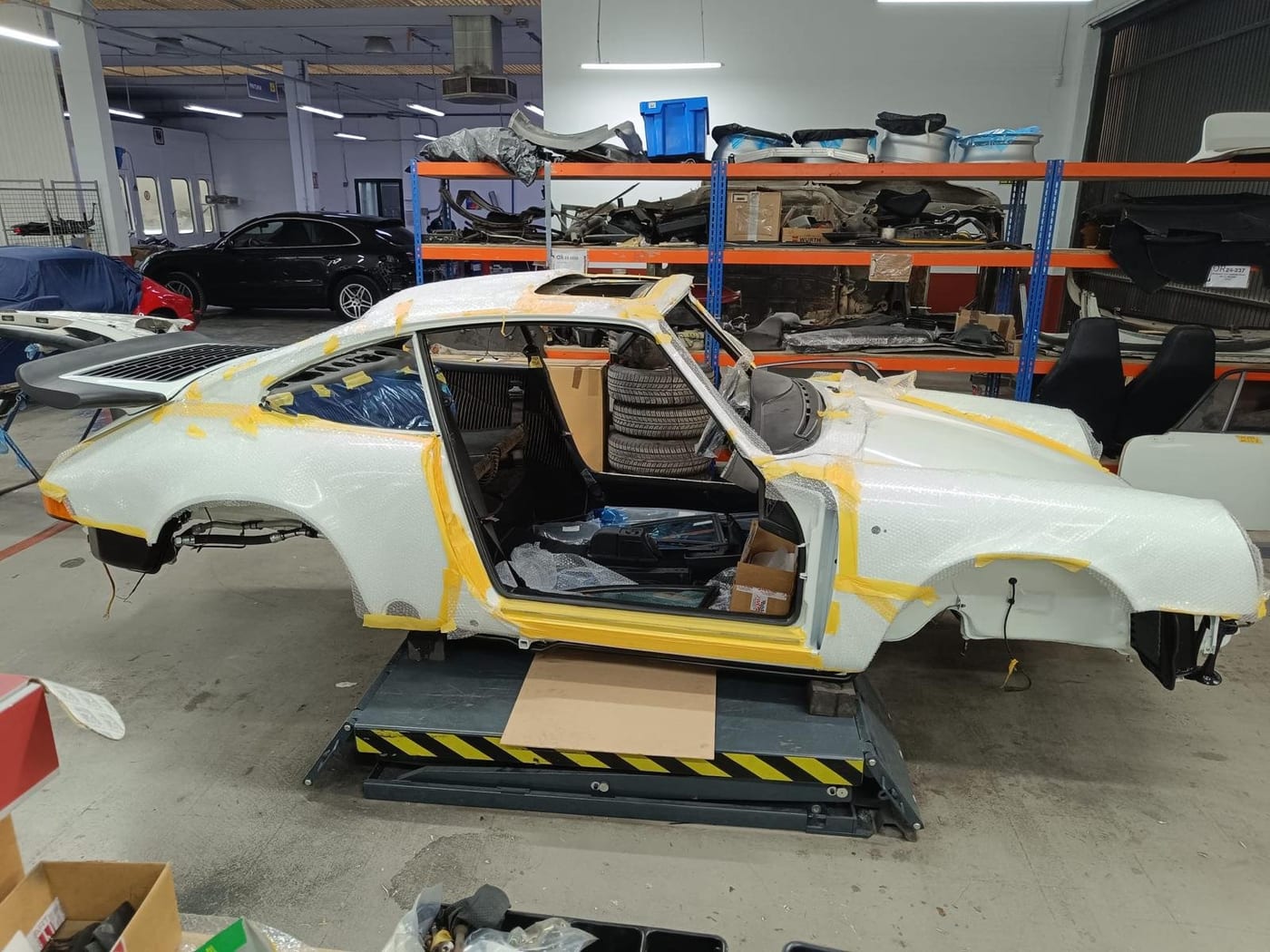
What is measured before painting
A Porsche body and paint repair depends more on preparation, fit, and material compatibility than on the final surface gloss.
- Paint thickness.
- Panel gaps.
- Corrosion.
- Deformations.
- Previous repairs.
- Color code.
- Removable parts.
- Condition of trim and chrome.
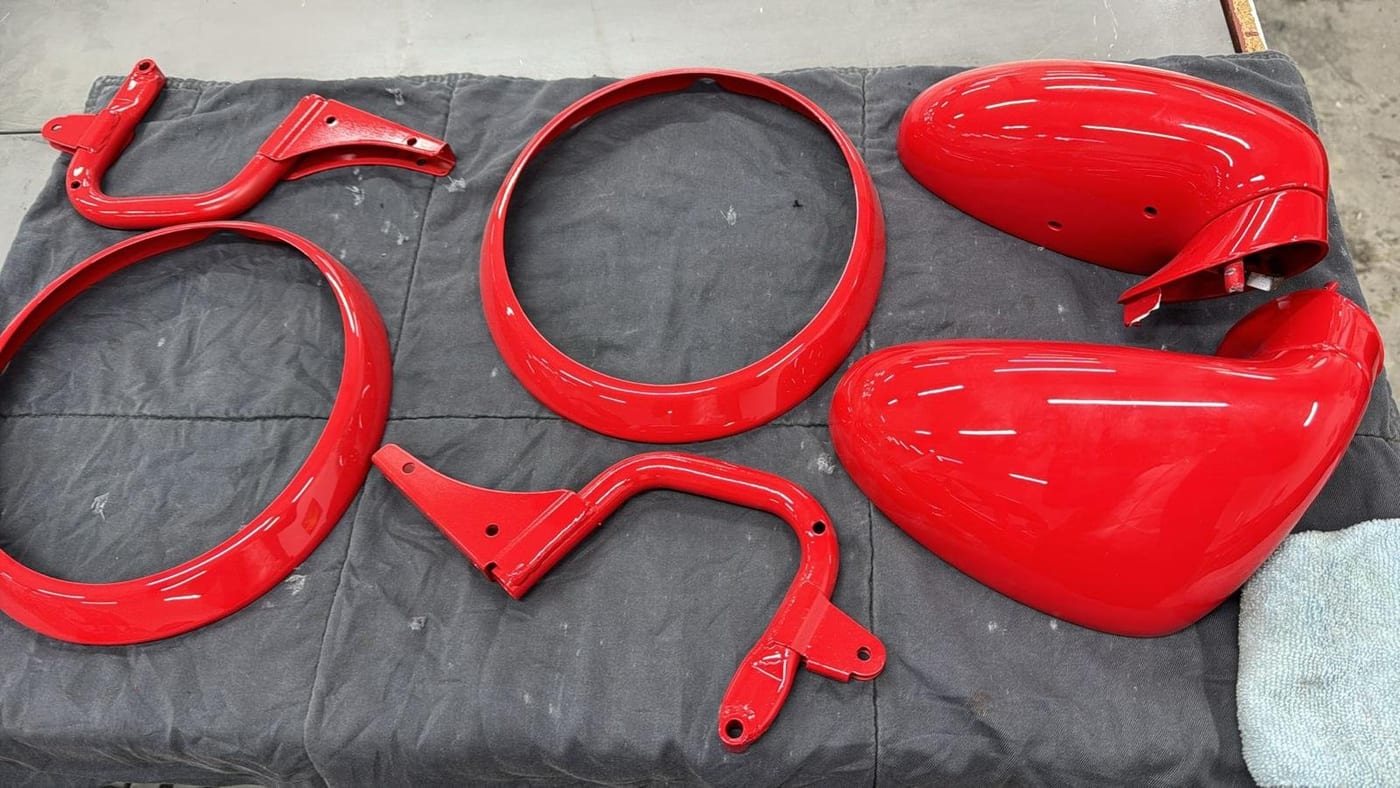
A specific area or the entire bodywork
The work can address a specific area or be part of a complete restoration. The dedicated booth in Barcelona allows for the coordination of preparation, painting, and assembly.
Components are removed as necessary to avoid masking lines, and a decision is made on whether to preserve, repair, or replace parts. With classic cars, visible corrosion necessitates an inspection of related areas.
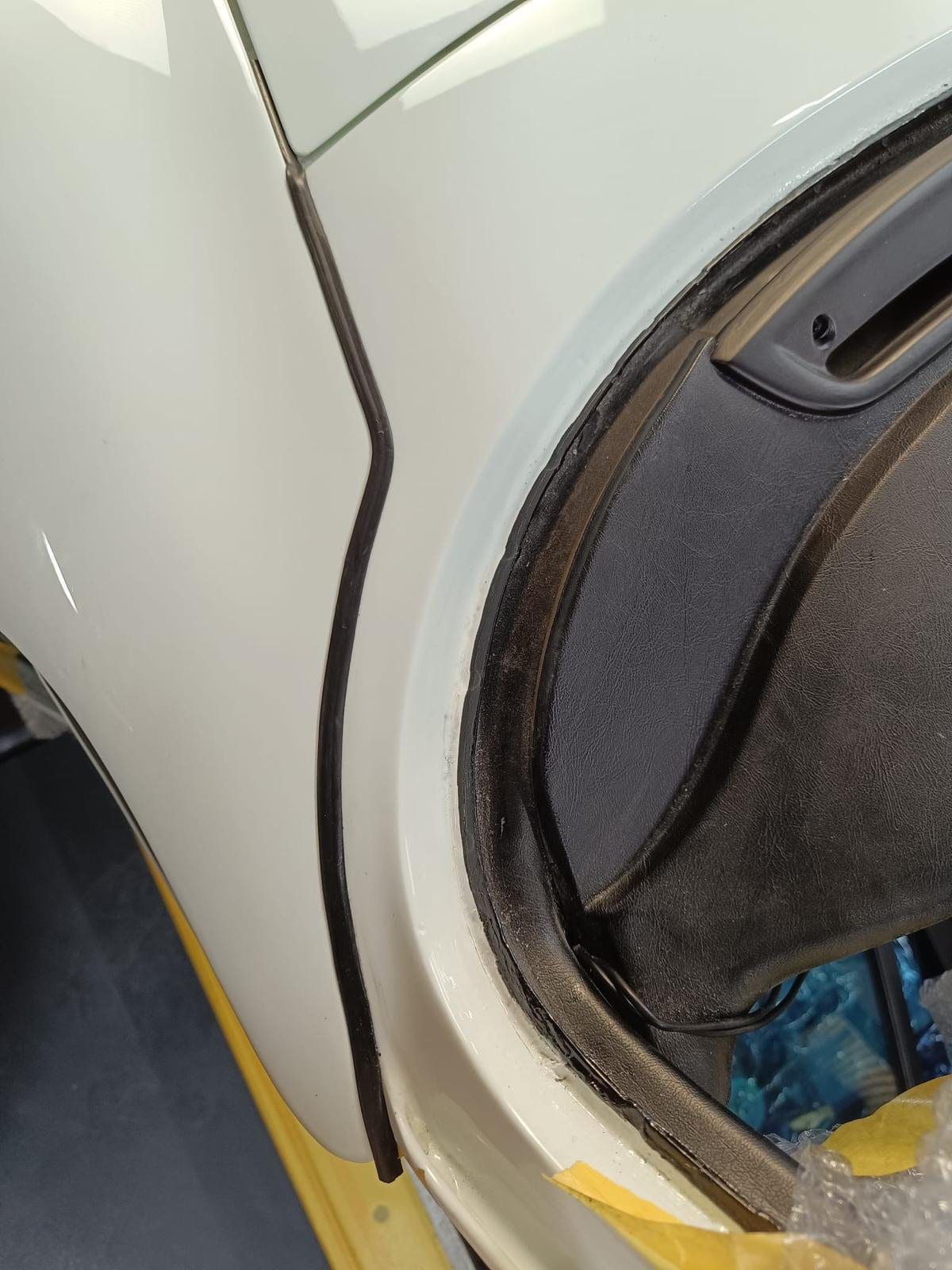
Factory colors and in-house spray booth
Repair and painting to Porsche specifications, using original factory colors and current paint code systems. In-house spray booth at the Barcelona workshop.
A well-executed paint job goes unnoticed. What stands out is a poor one: uneven panel gaps, a color that doesn't match the engine bay or door jambs, or trim that no longer sits flush.
What a coat of paint can't fix
The finish is the last thing you see, yet the first thing to reveal what lies beneath.
- Corrosion left beneath the bodywork will eventually reappear in the same spot.
- An uneven panel gap isn't fixed by painting; it is fixed by adjustment.
- Masking off trim instead of removing it leaves an edge visible against the light.
- A color mismatch with the engine bay or interior reveals the repair.
- A wheel arch left without anti-corrosion treatment simply restarts the cycle of decay.
When it is done
As part of a comprehensive restoration—where the entire body is stripped down—or as a standalone job for a car that simply needs a fresh coat of paint. Both processes are detailed step-by-step in the articles below.
The painting process for a G-Series 911
The Magazine showcases the work and photos in this documented case study.
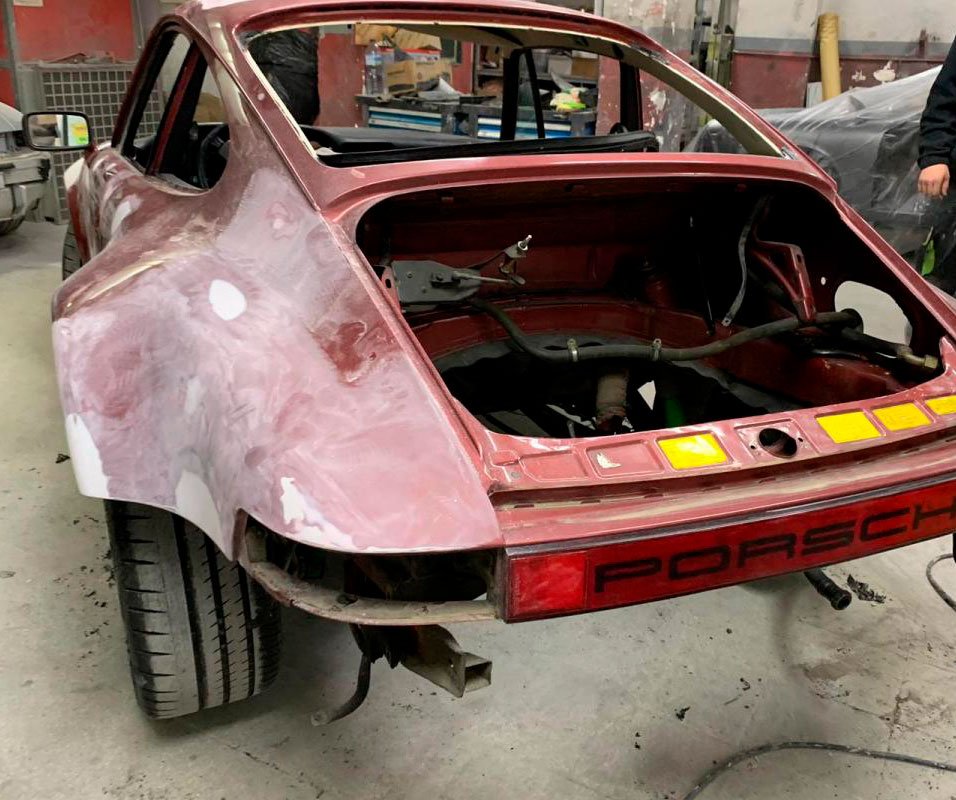
The finished bodywork
Bodywork fitted and painted according to the agreed scope, using reference colors, catalog-correct accessories, and anti-corrosion treatments where necessary.
Related services
Depending on the car's condition and the objective, the work can be coordinated with full restoration, pre-purchase inspection, or Porsche workshop services.
Frequently asked questions
01 Can just one area be matched?
It depends on the color, aging, and previous repairs. The initial assessment determines whether a localized repair can be blended in or if the work area needs to be expanded.
02 Why are panel gaps measured?
Because they reveal the geometry and quality of the fit. Correcting them after painting would damage the finish and obscure the root cause of any misalignment.
See it done
Jobs documented in the Magazine, with photos of the process.