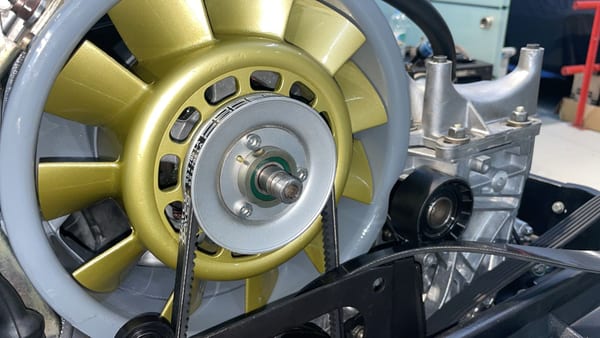
Porsche gearbox repair
All gearboxes from the brand, including automatics
We repair and rebuild all the brand's gearboxes: the 356, 915, and G50 units, as well as later models up to the 991 and 992. We also service automatic transmissions, which are often written off as unrepairable—though rarely are they truly beyond saving.
Rebuilding a gearbox is almost always a better option than replacing it; for a classic car, it is also the only way to preserve the correct serial numbers.
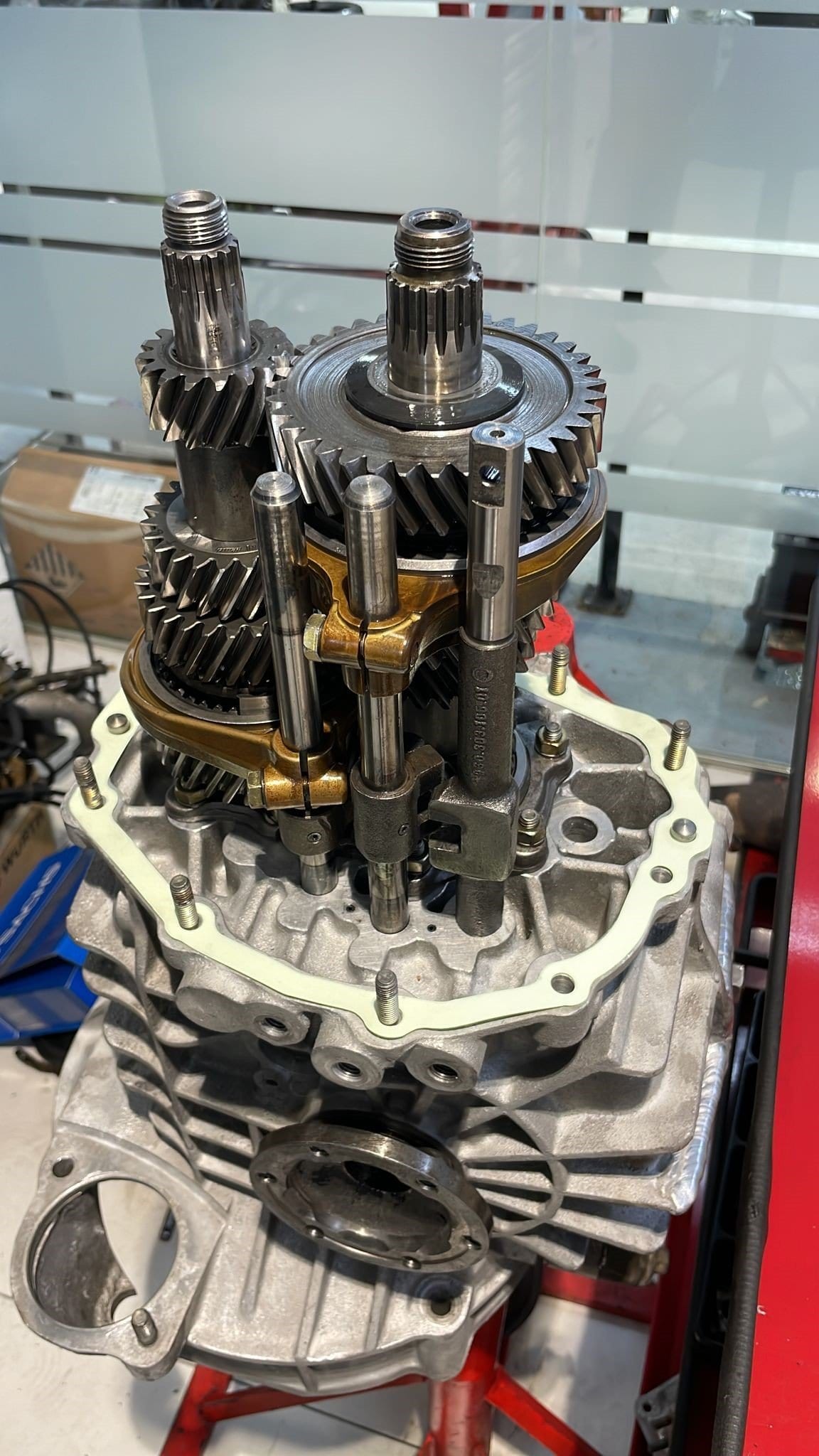
Symptoms reveal more than just the driving feel
A gearbox should be diagnosed based on its architecture and the precise moment the symptom appears, not merely on the general driving sensation.
- Noise.
- Affected gear.
- Temperature.
- Load.
- Oil history.
- Leaks.
- Control.
- Clutch.
- Cold and hot behavior.
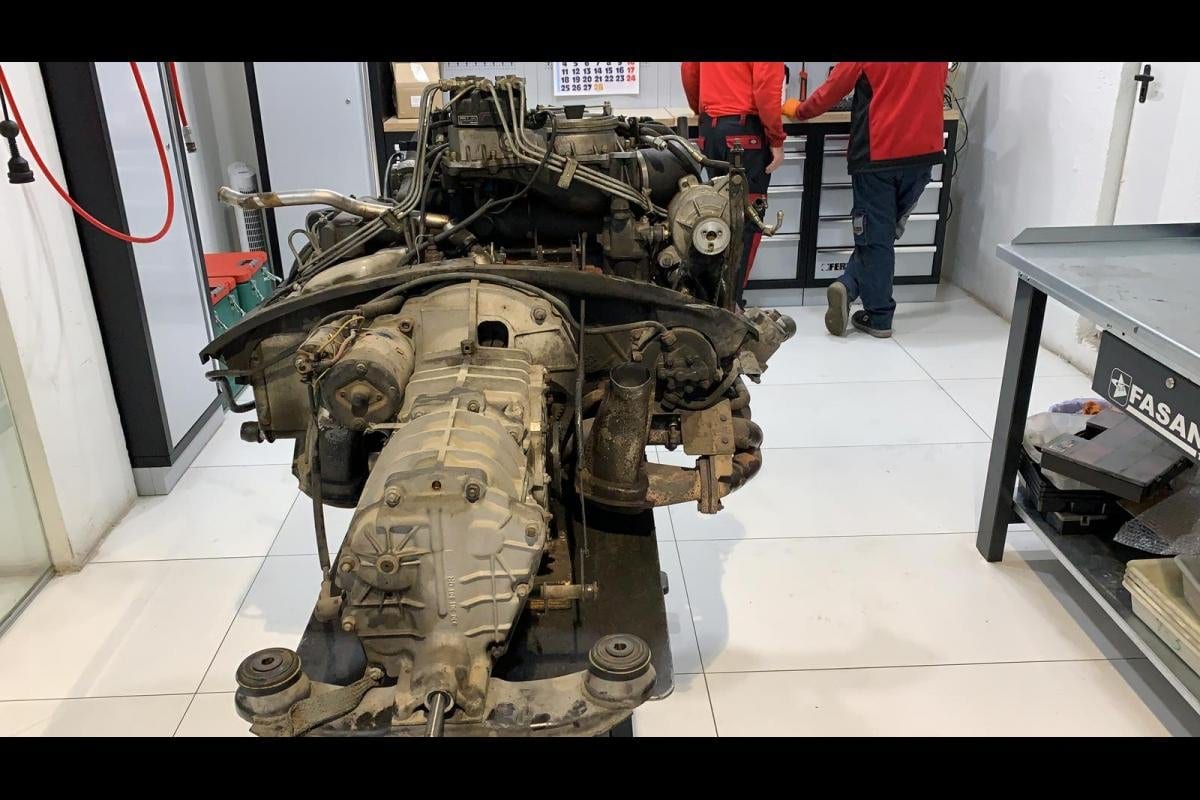
From the 915 to the PDK
We service manual and automatic Porsche transmissions, ranging from the 356, 915, and G50 models up to the 991 and 992 generations, including Tiptronic and PDK systems, depending on the specific unit.
Synchronizers, bearings, shift forks, seals, differentials, clutches, and control mechanisms are assessed individually. For automatic transmissions, the control unit, hydraulic system, and mechanical components are also evaluated separately.
Our process
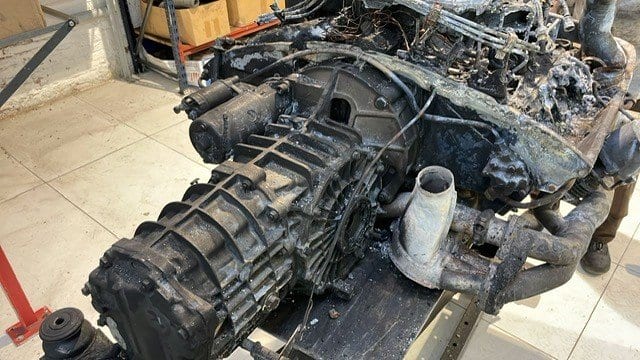
The transmission is opened, measured, and cataloged part by part. Synchronizers, shift forks, bearings, and seals are assessed individually, and the quote is prepared based on this itemized list. In vehicles where the transmission is mated to the engine, both units are removed as a single assembly and serviced simultaneously.
Noise doesn't always mean a transmission issue
A single symptom can have multiple causes; potential issues outside the transmission are ruled out before the unit is opened.
- Noise that disappears when the clutch is depressed: usually the release bearing, not the transmission itself.
- Gear grinds when cold but shifts smoothly when warm: worn synchronizer or incorrect oil.
- Gear popping out under load: shift fork, detent spring, or worn gear teeth.
- Leak at the bell housing: could be the transmission input shaft seal or the rear crankshaft seal; these can be distinguished without disassembly.
- Vibration only during acceleration: almost always the driveshaft or mounts.
- In an automatic transmission, a fault can stem from the control system, the hydraulics, or the mechanical components, and each requires a different approach.
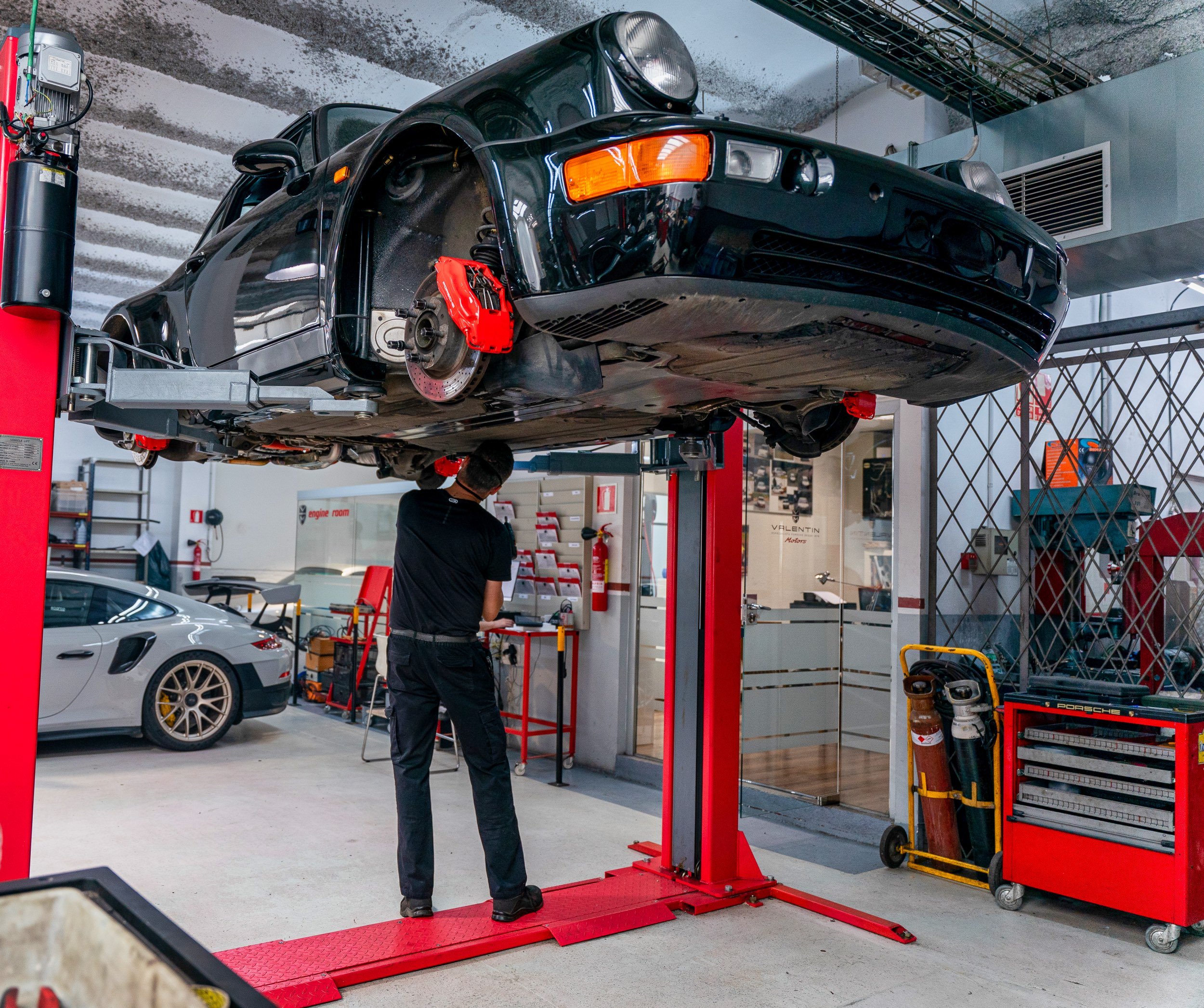
A 965 Turbo 3.3—an inside look
The magazine showcases the work and photos in this documented case study.
What is delivered with the transmission
A report on findings and parts, an authorized scope of work, and an assembled, tested transmission—without automatically resorting to replacing the entire unit.
Related services
Depending on the car's condition and intended use, the work can be coordinated with engine services, maintenance, or pre-purchase inspections.
Frequently asked questions
01 Are all gear-shifting problems located inside the transmission?
No. The shift linkage, clutch, mounts, or adjustments can cause similar symptoms. These are checked before concluding that the transmission needs to be opened.
02 Why rebuild a classic transmission?
Beyond restoring functionality, it allows for the preservation of the original unit linked to the car—important when matching numbers and configuration matter.
See it done
Jobs documented in the Magazine, with photos of the process.