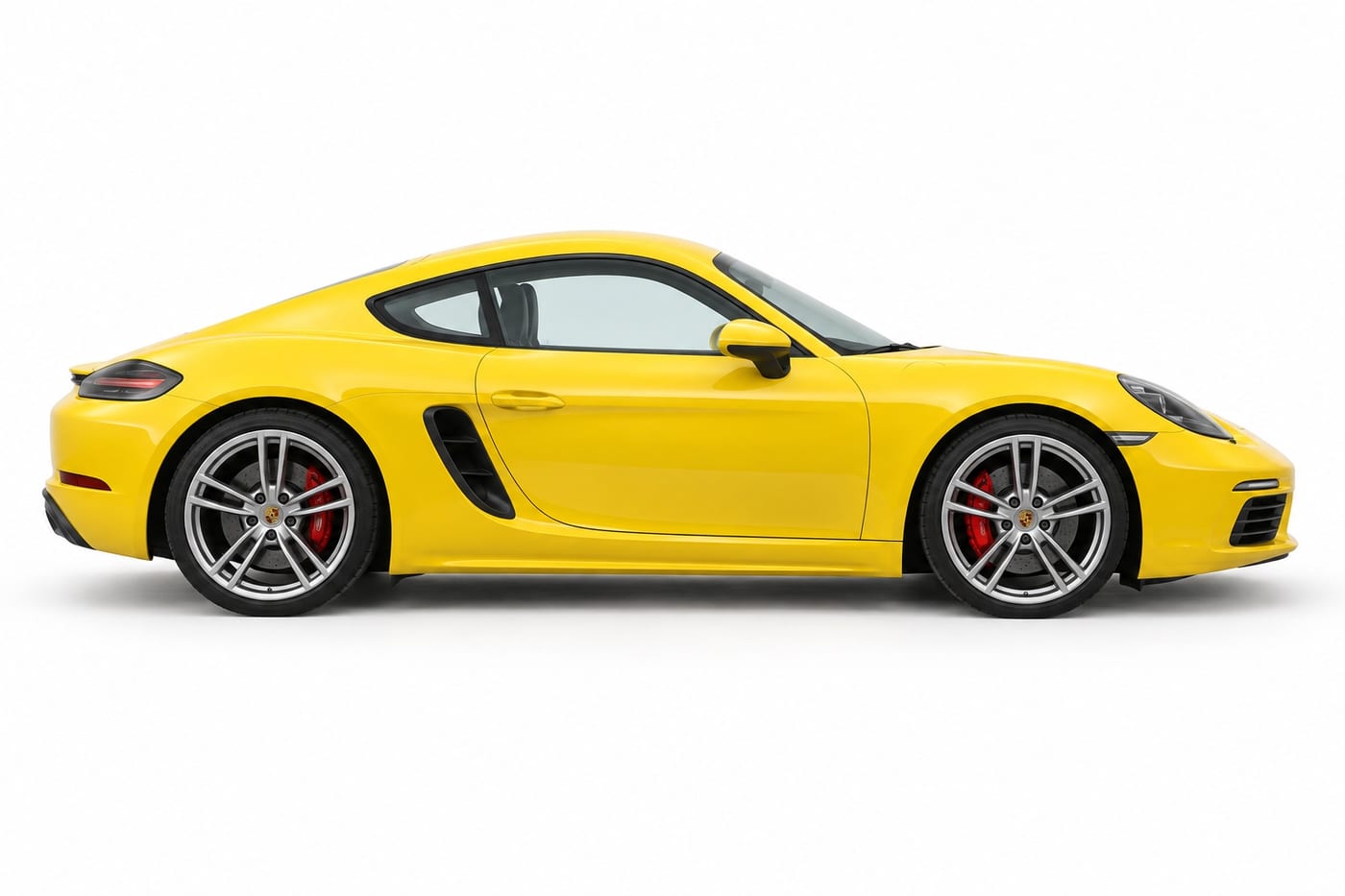
Porsche 718 guide: versions, common faults and buying advice
- Date
- Words
- Enric Godes
What to check when buying a used Porsche 718: four-cylinder turbo vs. 4.0, PDK, cooling, mounts, roofs, brakes and electronics.
Porsche 718, the reference profile for this generation.
The Porsche 718 type 982 has brought together the Boxster and Cayman under the same name since 2016. The initial range uses four-cylinder turbo boxer engines, while the GTS 4.0, Spyder, GT4 and GT4 RS return to naturally aspirated six-cylinder engines. Choosing by sound or power is not enough: cooling, torque delivery, typical use and brake and tyre costs also differ.
Being a recent car, an inspection must integrate digital history, campaigns, diagnosis and warranty with the physical condition. Few kilometres do not exclude track wear, dents to the underside of the body, degraded battery or clogged drains. Options such as PASM, PADM, PTV, PCCB, nose lift or full bucket seats only add value when they are present, documented and operational.
The guide avoids treating each forum post as a general fault. In a 718 you work by version, code and failure conditions. Pre-purchase should retain stored errors, test all systems and compare wear to hours and mileage before recommending purchase or discount.
Porsche 718 at a glance
- Years
- 2016-present
- Body styles
- Boxster convertible and Cayman coupe
- Engine
- Central boxer, 2,0/2,5 turbo four-cylinder or 4,0 six-cylinder
- Power
- 300-500 CV according to European version
- Transmission
- 6-speed manual or 7-speed PDK
- Production
- In progress or completed depending on variant and market
Which Porsche 718 should you choose?
718 Boxster and Cayman
2,0 turbo engine with 300 CV at launch. They are the entry to the range and offer a lot of torque; check intake sealing, actuators, cooling and PDK or manual maintenance.
718 S
2,5 turbo engine and 350 CV, with variable geometry turbocharger. The greater thermal load makes it important to know usage, oil, cooling and any reprogramming.
718 GTS 2.5
Four-cylinder turbo version with 365 CV. GTS equipment varies with options; confirm PASM, Sport Chrono, exhaust, PTV, seats and brakes using the factory sheet.
718 GTS 4.0
Six-cylinder naturally aspirated 4,0 and 400 CV at launch, manual or PDK. Requires checking particulate filters according to market, exhaust, ignition, cooling and usage records.
718 Spyder and Cayman GT4
4,0 engine with 420 CV in the first phase, GT chassis and bigger brakes. Spyder’s manual soft top, lower body, geometry, centre-lock wheels and circuit deserve specific inspection.
Cayman GT4 RS and Spyder RS
High-revving 4,0 engine, 500 CV, PDK and specific aerodynamics. Check campaigns, intakes, brakes, carbon, underbody, hours and circuit or transport traceability.
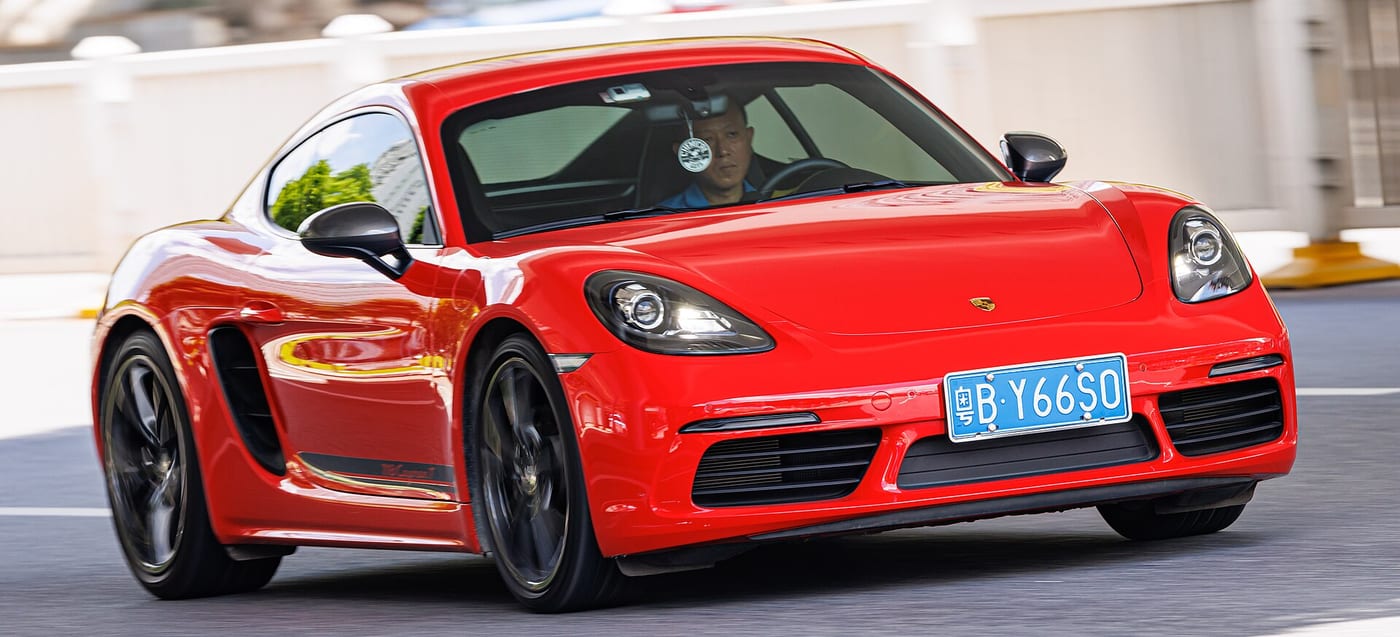
Porsche 718 Cayman. Photo: Dinkun Chen, CC BY-SA 4.0, via Wikimedia Commons.

What should you check before buying a Porsche 718?
Download factory equipment by VIN and verify campaigns, warranties and work. Confirm PASM, PADM, PTV, PCCB, lift, seats, exhaust and climate control. A car advertised as a GTS or GT must retain specific parts and not just stickers.
Read diagnostic data before clearing faults: operating hours, recorded mileage, misfires, fuel and boost pressure, temperatures, PDK, engine mounts and chassis systems. On manual models, review the over-rev ranges and assess them alongside clutch condition and use.
On 2.0 and 2.5 engines, test turbo pressure, actuators and intake sealing. Whistling, uneven boost or mixture code needs smoke test and data, not an automatic turbo replacement. Document any modified electronic control units or exhausts.
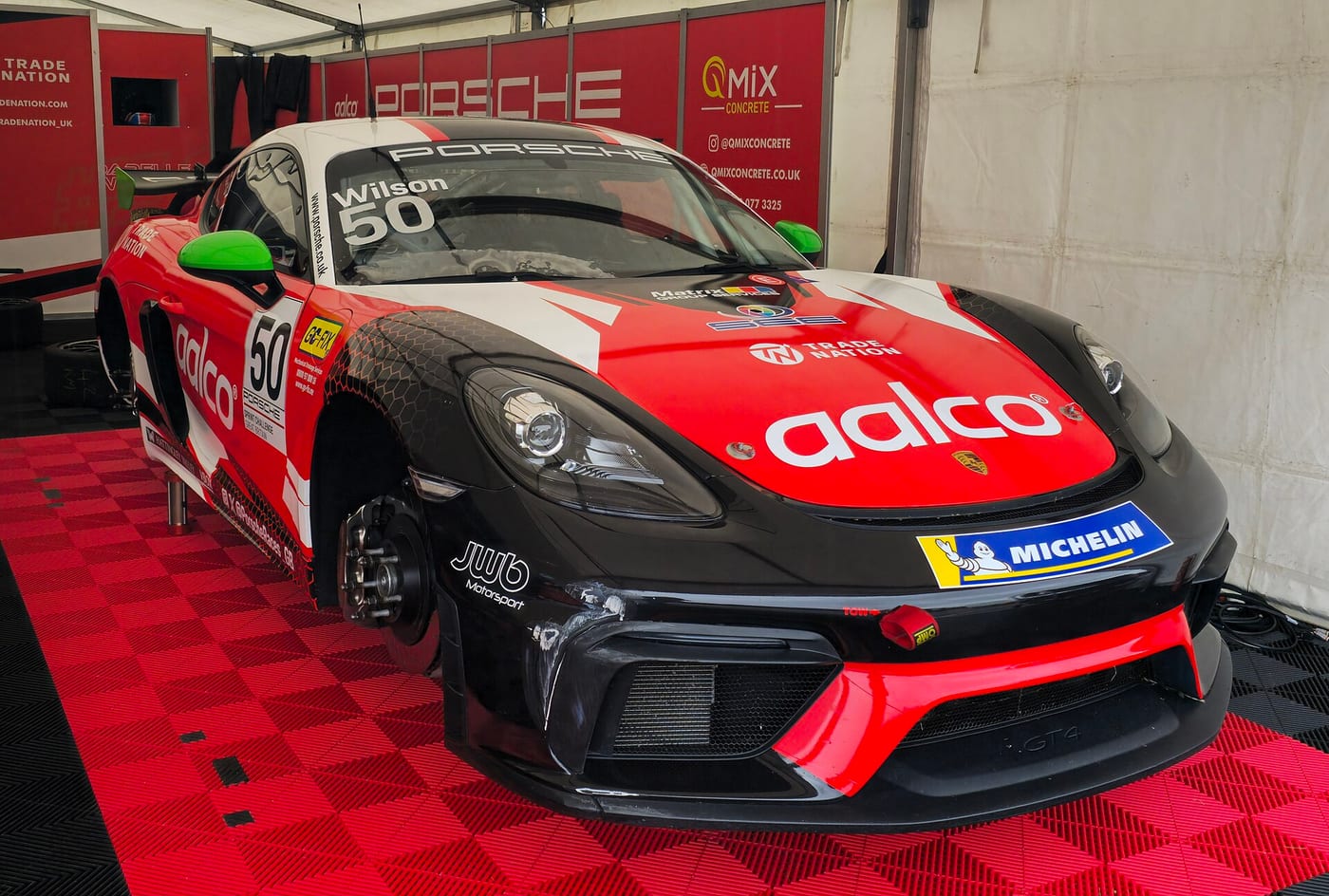
Porsche 718 Cayman. Photo: Calreyn88, CC BY-SA 4.0, via Wikimedia Commons.

Inspect radiators, condensers, pumps, valves and debris in side and front intakes. Pressure test if there is odour or residue. A mid-engine car is sensitive to correct bleeding; air or loss can generate uneven temperature.
Try PDK with the engine cold and warm, maneuvering and moderate load. Check the clutch and selection on manual models. Look for PADM warning, PASM leak, and arm or tyre wear. An alignment does not compensate for a component with play.
On Boxster and Spyder, check the soft top, tensioners, microswitches, sealing and drains; lift rugs to check for moisture. In GT inspects splitter, diffuser, carbon, PCCB or iron discs, centre-lock wheels and support points for curb or riser damage.
Known Porsche 718 faults
Boost actuators and leaks
Loss of torque, whistling or requested pressure other than actual pressure may come from the hose, valve, sensor, actuator or turbo. Testing vacuum, smoke and stroke avoids changing the entire assembly. Driving with incorrect mixture or pressure increases temperature and damages catalytic converters.
Cooling pump and valves
Odor, residue, frequent fans or unstable temperature require pressure testing and activation through the diagnostic system. An auxiliary pump and a main pump do not always produce the same pattern. Poor purging after repair can create a new symptom.
PADM mounts and PASM
Notice of dynamic engine mount, rebound or inconsistent hardness must separate support, wiring, sensor, shock absorber and unit. The car can circulate, but it loses its intended function and alters supports. Diagnose before replacing components in pairs without evidence.
PDK, clutch and flywheel
Judder when pulling away, knocking when selecting or noise on shutdown may come from clutches, flywheel, support, adaptation or hydraulics. Reading values and testing at temperature allows you to make a decision. Waiting for emergency mode increases the probability of secondary damage.
Drains and soft top
Water after seats, odour or intermittent sensors indicate checking drains and trays before sealing. Forcing an out-of-adjustment soft top breaks transmissions or tensioners. Moisture can reach switchboards and connectors, multiplying electrical failures.
Brakes and underbody on GT models
Cracks, PCCB impacts, scraped splitter or uneven wear reveal use and geometry. Not all damage requires replacement, but should be measured by the manufacturer’s method. In circuit, temperature and closing torques matter as much as thickness.
These are the workshop areas that step in once the diagnosis confirms it: gearboxes.
How is a Porsche 718 serviced?
Follow the VIN plan and add annual inspection if there are short trips, stopped periods or circuits. Oil and filter, cooling, brakes, tyres, underbody and diagnostics create a trend. In turbo, let the oil reach temperature before requiring torque.
The complete maintenance service includes spark plugs, filters, belt and injection and intake checks. In 4.0, monitor exhaust and filters according to market. A performance loss is measured before attributing it to tappets or software.
Maintain PDK, manual gearbox, differential and PTV according to time and use. Renew brake fluid and check PCCB with proper technique. After suspension or tyres, align and calibrate systems that require it.
Clean radiators and drains, test batteries and apply documented campaigns. At Spyder learn the correct soft top cycle; in GT it records closures, brakes and use. Prioritize a technical foundationline before adding power.
If the car has been reprogrammed, it retains the software version, planned fuel, requested pressure and assembled parts. A reversible and documented modification can be maintained or returned to origin; an unknown calibration prevents the interpretation of temperature, mixture and wear with certainty.
After any water ingress, dry and check connectors even if the cabin seems recovered. Electrical corrosion appears later. Documenting the area, cleaning drains and verifying consumption at rest avoids a chain of intermittent failures.
The Cayman and Boxster servicing rates give an idea of the scope of each service. The final quote depends on what turns up on the car.
What we have done at Valentín Motors
The inspection of the essential elements and the brake work published by Valentín Motors show the approach applicable to a 718: diagnosis, measurement and decision according to wear, not automatic replacement.
When there is no specific project published, the guide does not present cases of 987 or 981 as if they were type 982.
Who is a Porsche 718 for?
It is suitable for those who want a mid-engine sports car that can be used daily and will choose the engine based on use. The 2.0 offers sufficient performance; S and GTS turbo provide torque; 4.0 and GT prioritise sound, engine speed and chassis capability, with higher consumable costs.
It is not suitable for those who need rear seats or intend to maintain a GT on the same budget as a basic Cayman. A 981 offers six naturally aspirated cylinders across the range; a 987 reduces electronics; a 991 adds 2+2 and rear-engine behaviour.
Related work
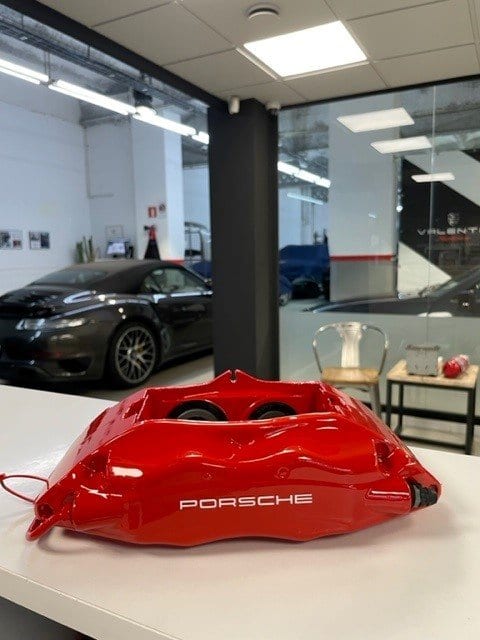
Brake caliper restoration
Restoration of brake calipers
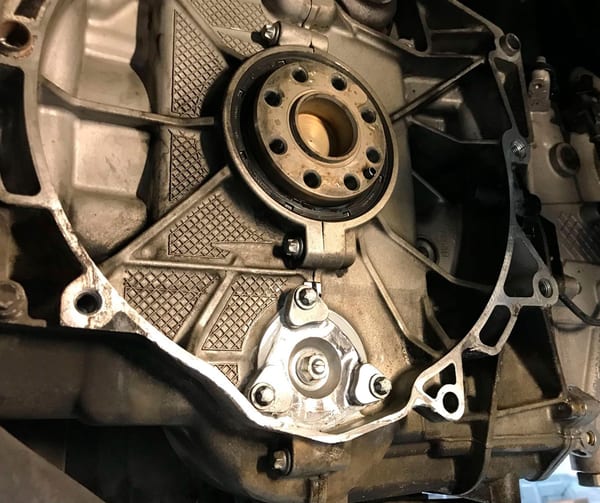
What is the Porsche IMS?
The first generation of the 996/986 series, the M96 and later the M97, has a mechanical weakness in the IMS, the bearing that supp
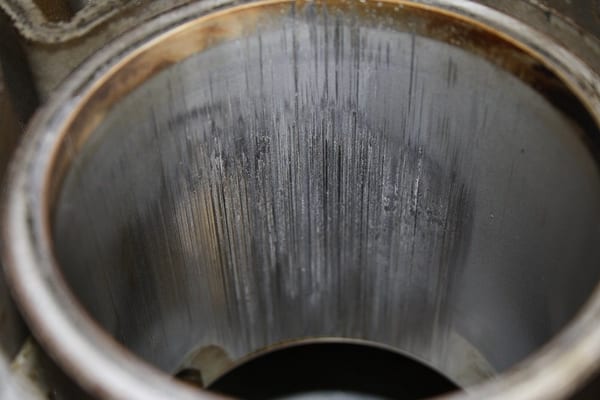
What is Porsche bore scoring?
Bore scoring affects the M97 engines of the 997.1 versions, the GTs aside. It happens when the cylinders wear unevenly, leaving sc