Porsche 992 guide: versions, inspection and buying advice
- Date
- Words
- Enric Godes
What to check when buying a used Porsche 992: digital history, campaigns, PDK, active systems, cooling, brakes and equipment.
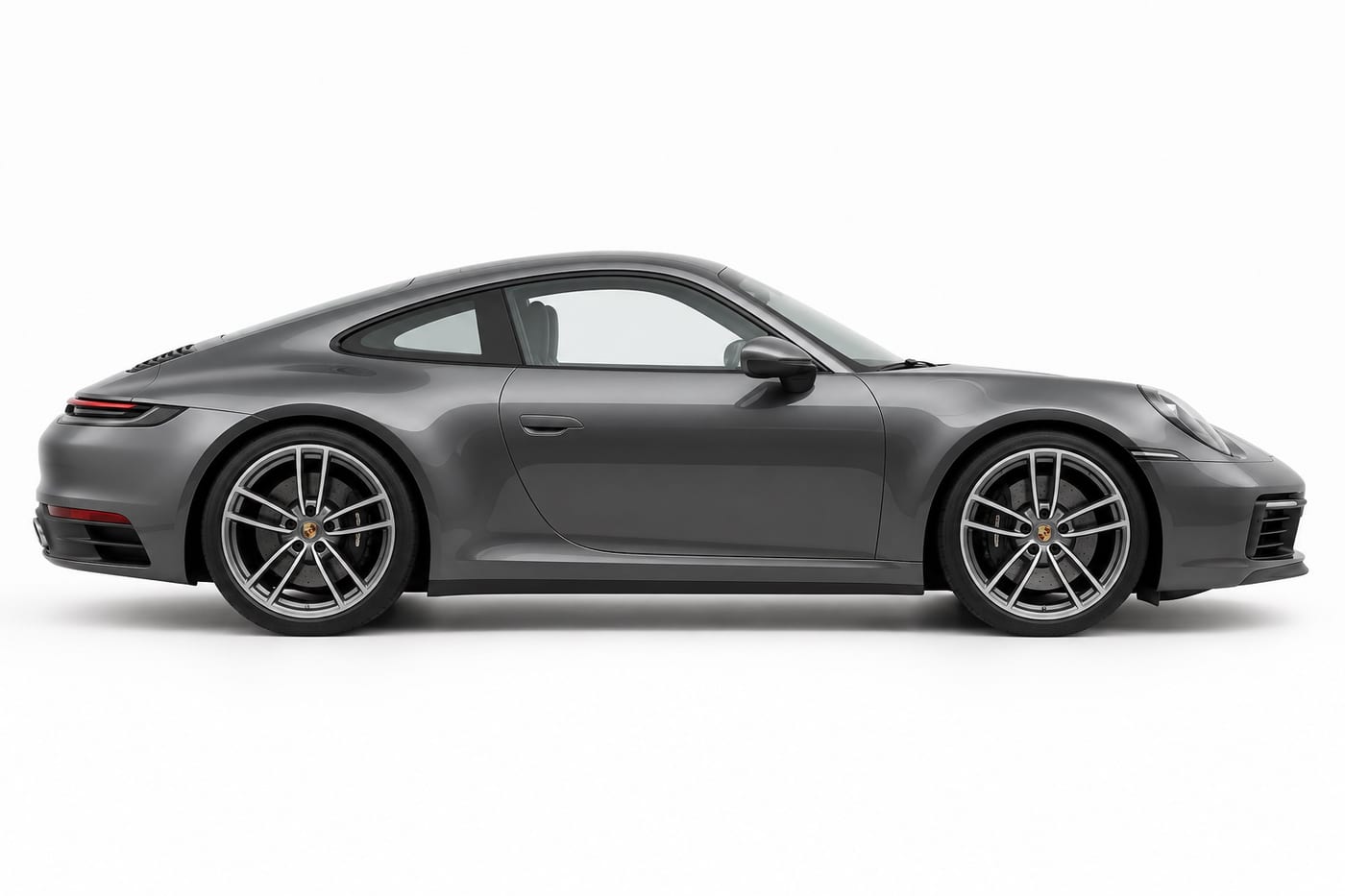
Porsche 992, the reference profile for this generation.
The Porsche 992 retains the architecture of the 911 and expands its daily usability with a wide body, more assistance and a more extensive electronic network. The first phase offers Carrera twin-turbo, Turbo and naturally aspirated engines in GT3; update 992.2 introduces, among other variants, the T-Hybrid system in Carrera GTS. That is why the exact name and model year determine any inspection.
Being a recent generation, the purchase usually includes warranty, campaigns, software and digital records. This is not a substitute for checking for wear and damage. A car with few kilometres may have accumulated track wear, underbody damage, damaged ceramic brakes or long periods with a low battery. Diagnostic readings should be checked against the physical condition.
This guide focuses on used cars and avoids presenting as a common fault what does not yet have a sufficient pattern. Warnings must be diagnosed by VIN, version and code; Product updates are ongoing. Before buying, confirm open campaigns and the current specification of the specific car with an authorised dealer.
Porsche 992 at a glance
- Years
- 2019-present
- Body styles
- Coupé, Cabriolet and Targa
- Engine
- Six-cylinder boxer, 3,0-4,0 l; turbo, naturally aspirated or T-Hybrid
- Power
- From 385 CV; depends on version and model year
- Transmission
- 6 or 7-speed manual and 8-speed PDK
- Production
- In progress
Which Porsche 992 should you choose?
Carrera 992.1
3,0 twin-turbo engine, 385 CV in Carrera and 450 CV in Carrera S at launch. Available with propulsion or all-wheel drive, Coupé and Cabriolet, and PDK or manual depending on version.
Carrera 992.2
Update started in 2024, with engine, aerodynamics, instrument cluster and infotainment changes. The powers and combinations evolve by year; Always confirm factory details by VIN.
Carrera GTS T-Hybrid
The 992.2 GTS combines a 3,6 six-cylinder with an electric turbocharger and a high-performance hybrid system, with 541 CV of system power at launch. Its diagnosis and safety require specific training.
Targa
All-wheel drive, characteristic arch and automated roof. The complete cycle, glass adjustment, drains, sensors and possible noises must be tested several times, without obstacles or low voltage.
Turbo and Turbo S
All-wheel drive, PDK, active aerodynamics and enormous thermal load. Power and technology vary with the evolution of the 992; check specification, cooling, brakes and any modifications.
GT3, GT3 RS, S/T and Dakar
Variants with very different uses, from circuit to limited series or high height. Authenticity, campaigns, centre-lock wheels, underbody, brakes, hours and configuration outweigh comparing power alone.
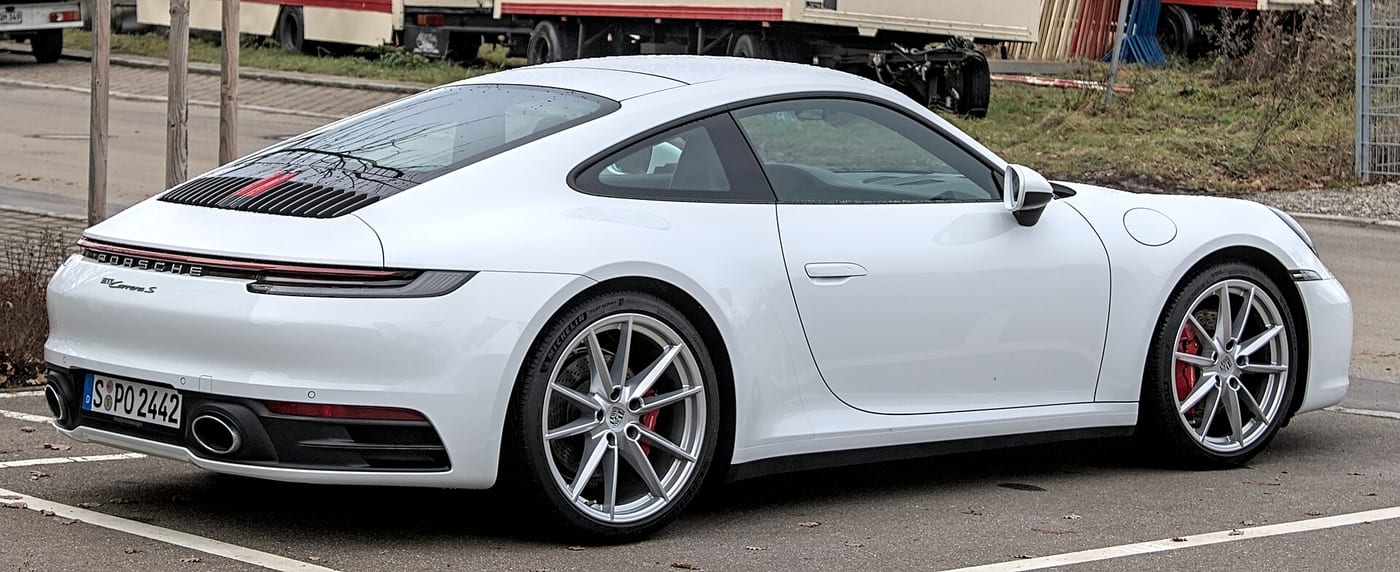
Porsche 911 from the 992 generation. Photo: Alexander Migl, CC BY-SA 4.0, via Wikimedia Commons.
What should you check before buying a Porsche 992?
Get the list of options and model year from the VIN. Verify campaigns, updates and remaining warranty with documentation. Differentiate a software-resolved notice from a replaced part; ask for a repair order and not just verbal confirmation.
Perform complete diagnosis without erasing memory: present and historical faults, hours, operating counters, temperatures, misfires, pressure, PDK and chassis systems. On manual models, check over-rev events ranges; in GT it relates data to circuit usage.
Inspect front end, radiators, condensers, underbody aerodynamics, wheel arches and lift points. In cars with nose lift, check for leaks, symmetrical height and repeated cycle. Underbody scraping can affect actuators or ducts even if the exterior bumper is intact.
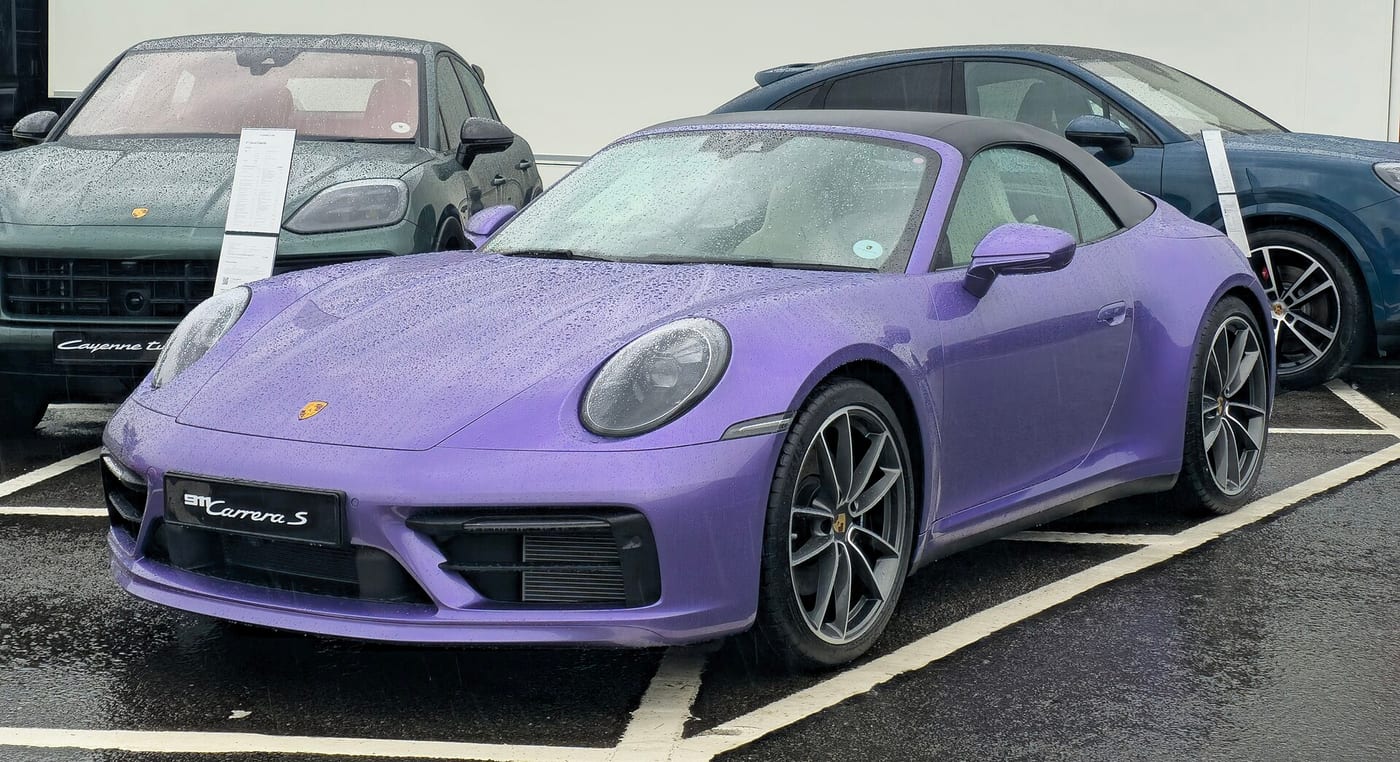
Porsche 911 from the 992 generation. Photo: Calreyn88, CC BY-SA 4.0, via Wikimedia Commons.
Try PDK from cold: selection, slow maneuver, exit, smooth shifting and response to warm-up. Any knock or warning requires adaptation and diagnostic values, not assuming software behaviour. On manual models, check clutch, selector and consistency of recorded use.
Check PASM, PDCC, rear steering, active aerodynamics, exhaust, cameras, climate control, PCM, connectivity, lock and Targa or Cabriolet. The battery should be tested under real load: a discharged unit can generate a cascade of codes and hide the original fault.
Measure discs, pads, tyres and rims. At PCCB look for impacts and use appropriate measurement; in central closure confirms tool, procedure and torques. A set of Turbo or GT consumables changes the initial cost even if the car is within tolerance.
Known Porsche 992 faults
Low voltage and multiple warnings
Simultaneous messages after weeks of shutdown usually require testing battery, load and consumption before condemning units. Clearing codes without stabilizing voltage removes context. A degraded battery can alter roofs, parking brake, chassis and communication between modules.
Cooling system and control valves
Odor, residue, frequent fans or inconsistent temperature call for pressure testing and guided activation of pumps and valves. The front accumulates debris and can lose efficiency. In high load versions, a small anomaly quickly becomes relevant.
PDK and drivetrain
Shock when selecting, shaking when maneuvering or limp-home mode may come from software, adaptation, flywheel, clutches, hydraulics or support. The diagnosis must retain codes and conditions of appearance. Continuing to drive in limp-home mode can increase damage and temperature.
Active systems and sensors
PASM, PDCC, rear steering, aerodynamics and elevator share sensors and communications. A fault can deactivate several functions without all of them being damaged. Checking power, network and calibration avoids replacing modules due to correlation.
Targa or Cabriolet roof and drains
Asymmetric movement, noise, humidity or position warning forces you to stop the cycle and locate the adjustment, sensor, cable or drain. Forcing the mechanism can damage panels and actuators. Preventive cleaning reduces water ingress into modules.
T-Hybrid and high voltage
The Carrera GTS 992.2 incorporates high voltage components and an electric turbocharger. A warning should not be treated like a conventional 12 volt system. Immobilization, diagnosis and repair require procedures and qualified personnel to avoid damage and risks.
These are the workshop areas that step in once the diagnosis confirms it: gearboxes.
How is a Porsche 992 serviced?
Follow the plan corresponding to the VIN and record jobs by date and mileage. For short trips or sport use, an annual oil, filter, brake, tyre, cooling and underbody inspection provides a baseline even if the official interval is longer.
The full service includes spark plugs, filters and version-specific checks. PDK, all-wheel drive and differentials have their own fluids and procedures. Do not extend an interval just because the car indicates few kilometres if time has passed or it has worked on the circuit.
Keep software updates and service campaigns documented, and support the battery with compatible equipment during storage. Clean radiators and drains, calibrate driver aids after wheel alignment and check cameras or sensors after bumper removal. Work on T-Hybrid systems requires the correct high-voltage training and safe isolation procedures.
Check tyres for age, specification and wear differences, especially in all-wheel drive. Measure PCCB or iron discs with correct method. In GT and Turbo it registers centre-lock wheels torques and reduces intervals depending on temperature and use.
Keep a diagnostic report before and after each major intervention. In a generation still current, this traceability helps distinguish a software update, a campaign and a mechanical repair, and avoids interpreting the following notice without context.
The 911 servicing rates give an idea of the scope of each service. The final quote depends on what turns up on the car.
What we have done at Valentín Motors
The essential elements inspection published by Valentín Motors represents the starting point: identifying wear and warnings before turning a routine inspection into indiscriminate replacement.
Being an evolving generation, any case must be associated with VIN, model year and campaign. We avoid extrapolating an isolated failure to all 992.
Who is a Porsche 992 for?
It is suitable for those who want a 911 for frequent use, travel and high performance with current aids, and agrees to maintain software, battery, active systems and consumables. Carrera usually covers more uses; Turbo and GT only justify their cost if they will be used and cared for as such.
It is not suitable for those looking for analogue simplicity or who plan to keep the car without battery support and long-term maintenance. A 991 offers a slightly less complex modern experience; a 997 reduces size and electronics; a 718 can provide more space and balance for a different budget.