Porsche 928 guide: versions, common faults and buying advice
- Date
- Words
- Enric Godes
How to service a Porsche 928 without underestimating its complexity: engine valve timing system, crankshaft thrust, fuel, electricity, air conditioning and transaxle.
Porsche 928, the reference profile for this generation.
The Porsche 928 is a front-engine V8 grand tourer with transaxle transmission, designed to travel fast with stability and comfort. Its production for almost two decades generated very different engines, injections, brakes, gearboxes and interiors. Ordering parts or comparing prices without identifying year, market and code usually starts the problem.
A cheap 928 can start and go while accumulating overdue timing-belt maintenance, old fuel lines, disabled climate control, and an electrical system full of bypasses. Complexity does not make it fragile by definition, but it requires orderly diagnosis and documentation. Repairing by successive replacement is especially expensive.
A pre-purchase inspection should include a check that is not always carried out on other Porsche models: the flexplate position and crankshaft end float on automatics. Earth connections, the electrical panel, climate-control actuators and battery drain also need checking. A good 928 feels solid; vibration, heat and warning lights are symptoms, rather than part of its character.
Porsche 928 at a glance
- Years
- 1977-1995
- Body styles
- 2+2 coupe
- Engine
- Water-cooled front V8, 4,5-5,4 l
- Power
- 240-350 CV in main European versions
- Transmission
- 5-speed manual or 3/4 automatic
- Production
- 61.056 units
Which Porsche 928 should you choose?
928
The initial version, since 1977, uses a 4,5 V8 and 240 CV in Europe. Equipment, injection and early brakes require parts and diagnosis according to their year.
928 S and S2
Displacement and power grew during the eighties, with different names per market. The European S2 reaches 310 CV; confirm compression ratio, injection and catalytic converter.
928 S4
From 1986/1987, 320 CV four-valve V8, updated bodywork and more electronic management. It is a usable basis if the engine, electrical and automatic valve timing system are documented.
928 GT
330 CV version, normally manual, with engine and chassis evolution. Check the authenticity of the gearbox, differential, wheels, brakes and options, as well as the history of intense use.
928 GTS
Final stage, 5,4 litres and 350 CV, with widened rear wings and revised equipment. Its value requires confirming engine, transaxle, body and specific components.
Manual versus automatic
The manual is less common and has its own clutch and torque tube; the automatic fits the character of the model, but requires checking flexplate, axial play, leaks and hot changes.
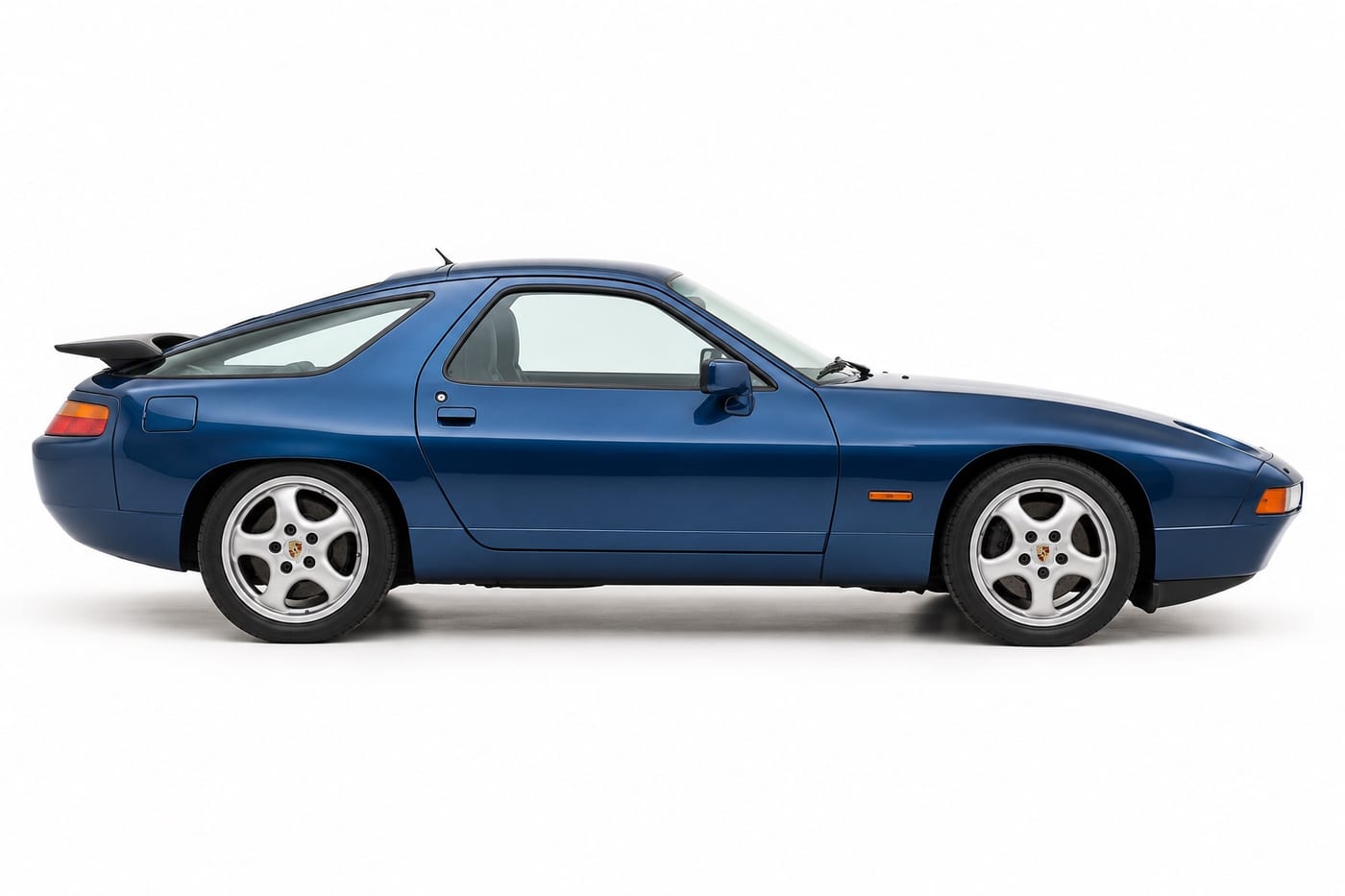
Porsche 928 grand tourer. Photo: Calreyn88, CC BY-SA 4.0, via Wikimedia Commons.
What should you check before buying a Porsche 928?
Identify model year, market, engine, gearbox and injection system by VIN and tags. North American and European powers are not directly compared. Ask for invoices for the engine, pump, fuel, gearbox, electricity and air conditioning valve timing system.
Demand date and mileage of the belt, rollers, tensioners and water pump. Inspect alignment, tension and leaks. In interference engines, a breakage can bend valves; an invoice without component details leaves part of the risk unresolved.
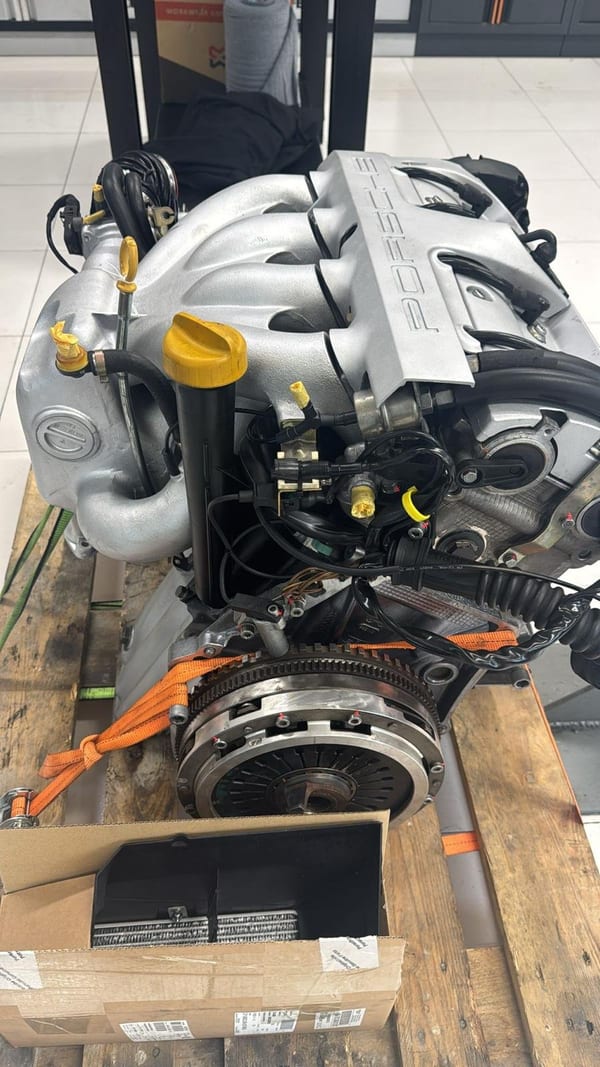
In automatic machines, it measures the axial play of the crankshaft and checks the position and tension of the flexplate according to the procedure. A displaced plate can load the thrust bearing. Detecting it early allows you to correct the adjustment; Ignoring it can damage the block and crankshaft.
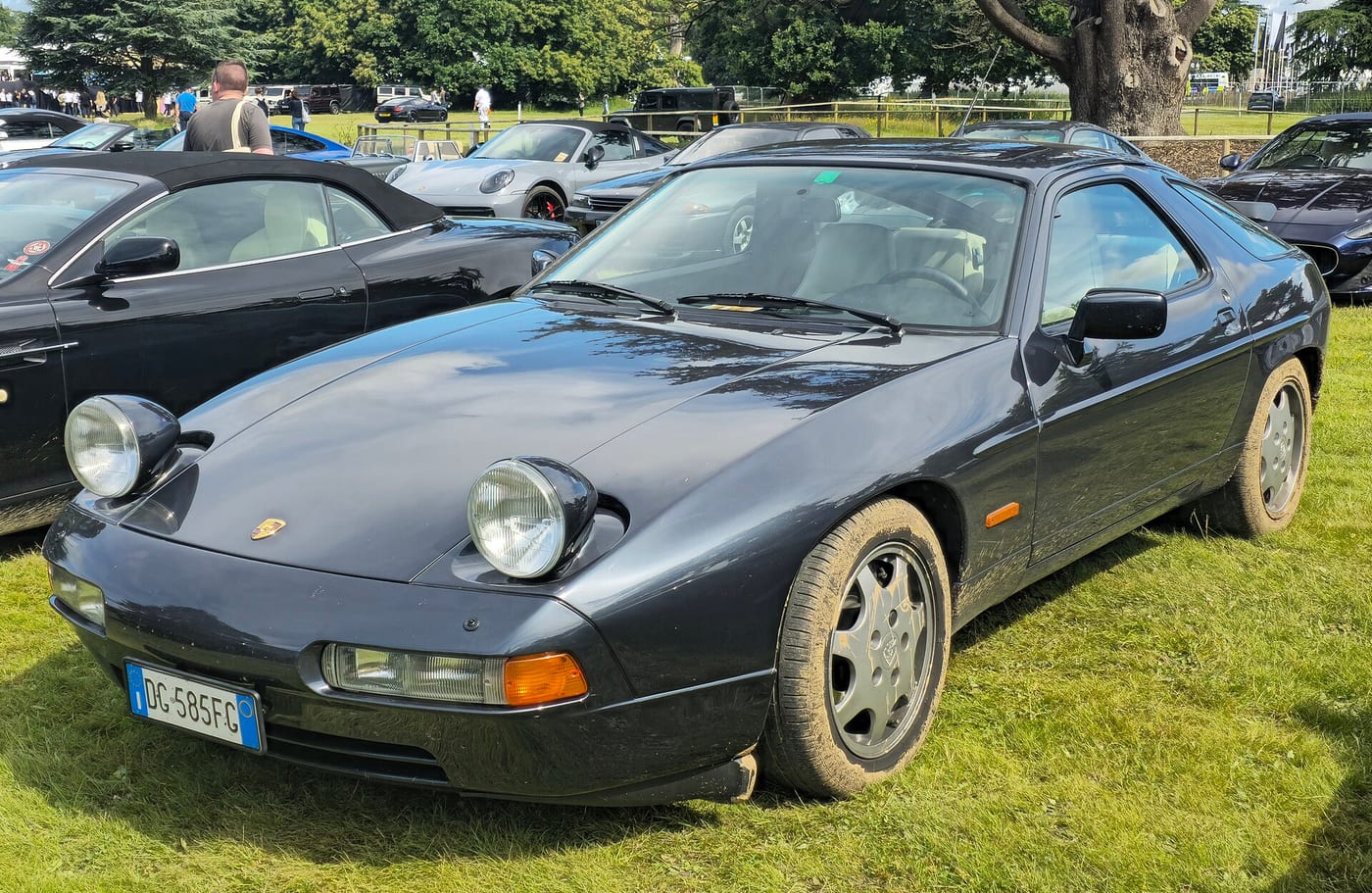
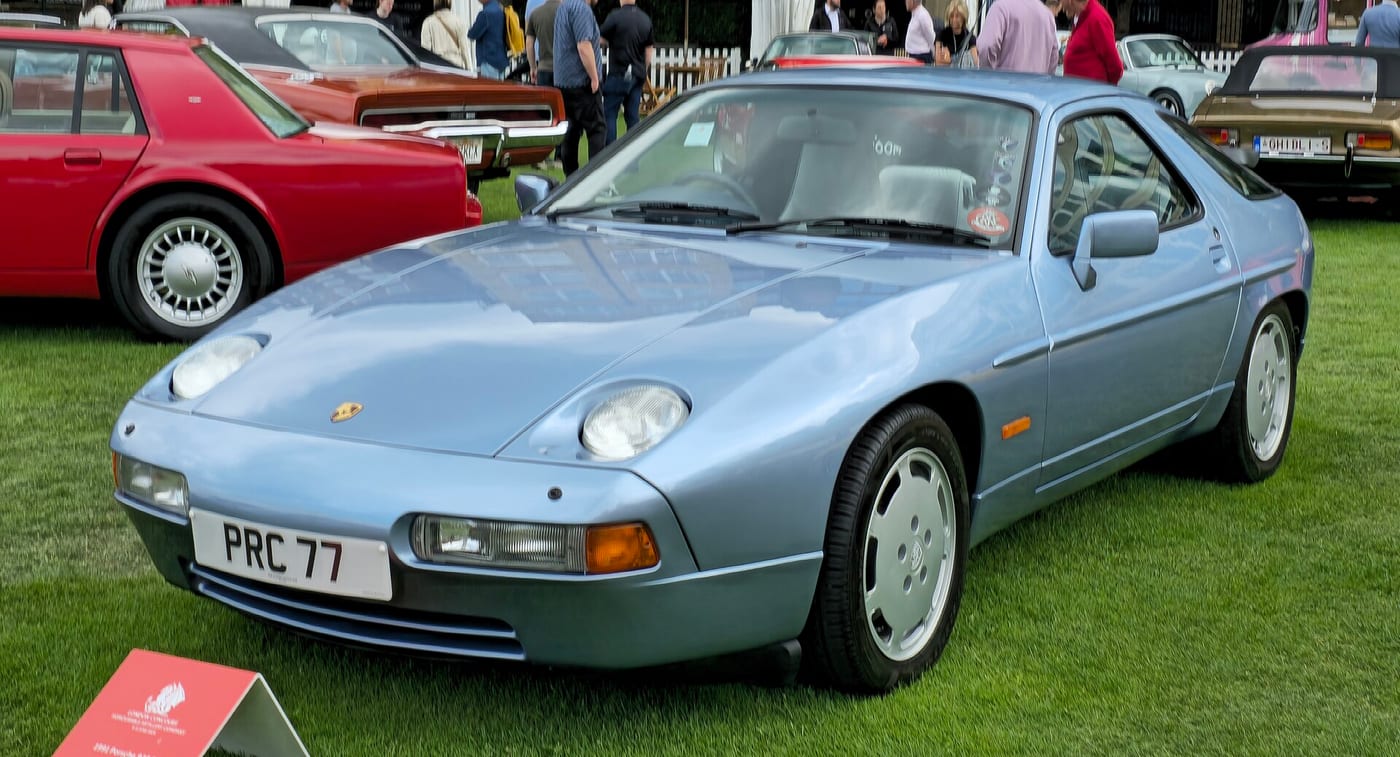
Porsche 928 grand tourer. Photo: Calreyn88, CC BY-SA 4.0, via Wikimedia Commons.
Open electrical panel and check fuses, relays, grounds and modifications. Look for heat, sulfation, added cables and consumption. Test each function: seats, instrument cluster, lights, wipers, lock, roof, fans and interior adjustment.
Test air conditioning in all modes. Vacuum tubes, actuators, heater valve, compressor and control can fail separately. Momentary cold air does not confirm that it mixes temperature or maintains pressure without discharging the battery.
Check fuel lines, injectors, regulators and hoses, as well as cooling and coolers. On the road it separates engine vibration, torque tube, wheels and transaxle. Check brakes, steering, bearings and rear axle bushings.
Known Porsche 928 faults
Timing belt and water pump
Noise, loss, abnormal temperature or expired history justify not starting more than necessary. The intervention should include inspection of rollers, tensioner, seals and condition of pulleys. A new belt with a blocked pump continues to put cylinder heads at risk.
Flexplate and thrust bearing
In automatic machines, axial thrust out of tolerance, vibration or displaced flexplate can indicate serious wear. Releasing tension and fixing position according to procedure can prevent damage if detected early; With advanced wear, the engine must be measured before promising a minor repair.
Fuel lines
Odor, humidity or hardened hoses on the hot V8 require immobilization. Replace ducts with correct specification and crimp, check regulators and injectors and test pressure. The risk of fire causes this work to precede power or aesthetic improvements.
Electrical panel, earth connections and current draw
Intermittent failures in several systems usually share ground, power or previous repair. Measuring voltage drop and consumption is more effective than changing relays at random. A hot spot can damage panel and harness if it remains charged.
Climate control and vacuum system
Always hot air, air outlets that do not switch or affected idle can come from actuators, lines, valve or control. Plugging circuits eliminates functions and makes the following diagnosis difficult. Repairing according to the system diagram preserves comfort and defogging.
Torque tube, automatic gearbox and transaxle
Buzzing, knocking when selecting, vibration or late changes require checking supports, tube, bearings, flexplate, level and pressure. Circulating with vibration punishes bearings and joints. The correct oil does not compensate for incorrect mechanical adjustment.
These are the workshop areas that step in once the diagnosis confirms it: engines and gearboxes.
How is a Porsche 928 serviced?
Manages valve timing system by date and mileage and records voltage and components. Oil, filter and coolant must follow specification and use; Inspect fuel lines and coolers at each relevant inspection.
Clean and protect electrical panel and grounds without adding undocumented jumpers. Check battery, alternator and consumption at rest. Maintaining correct voltage prevents false diagnoses in the dashboard, air conditioning and control units.
Service of automatic or manual, differential and torque tube should include leaks, supports and vibration. Automatically controls flexplate and axial play periodically. Renew brake fluid and check calipers, discs, steering and bearings.
Use the car with regularity tests for classics and test air conditioning, roof and actuators. Keep drains clean and check for corrosion under the battery, windows, tailgate and underbody. A complete baseline is a priority before refinishing leather or mounting larger wheels.
Keep drawings of any electrical repairs and label replaced relays or connectors with the correct reference. The continuity of the history reduces hours of diagnosis and allows reversing old alarms, radios or immobilizers without damaging the original harness.
After renewing the engine valve timing system, record tension, parts and axial play reading on automatics. Repeat the checks planned after seating. An invoice with measurements is more useful than the generic phrase full maintenance.
In cars that remain stationary, turn and use air conditioning, closures and roof regularly and control humidity. A complete tour allows you to check load, temperature, brakes and gearbox; Starting the V8 for a few minutes adds condensation without checking the systems under real conditions.
The transaxle servicing rates give an idea of the scope of each service. The final quote depends on what turns up on the car.
What we have done at Valentín Motors
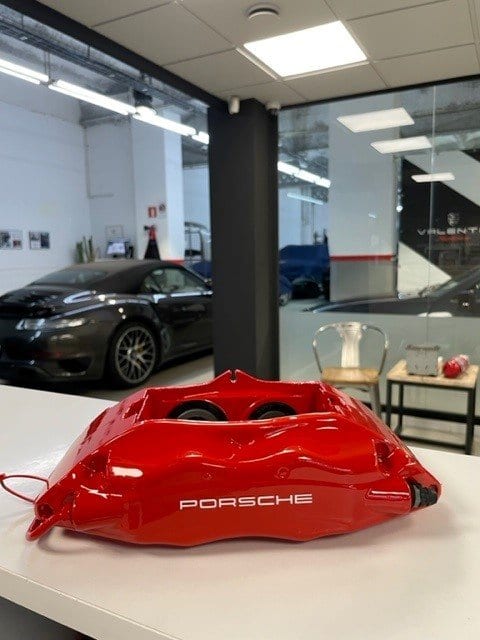
The essentials inspection and caliper restoration published in the Magazine show how to start with safety, leaks and measurement before tackling finishes on a complex grand tourer.
We do not present 944 or 968 works as if they were 928. The transaxle architecture shares principles, but the V8, electricity and air conditioning require specific diagnosis.
Who is a Porsche 928 for?
It is suitable for those who want a classic Porsche for touring, appreciate the torque of a V8 and are willing to learn the exact specification of their unit. An S4 typically balances availability and usage; GT and GTS add rarity and authenticity cost.
It is not suitable for those looking for simple mechanics or a purchase without a budget for electrical and climate-control repairs. A 944 reduces size and cylinders; a 968 offers a lighter late evolution; a 911 G trades comfort for a more direct rear-engined driving experience.