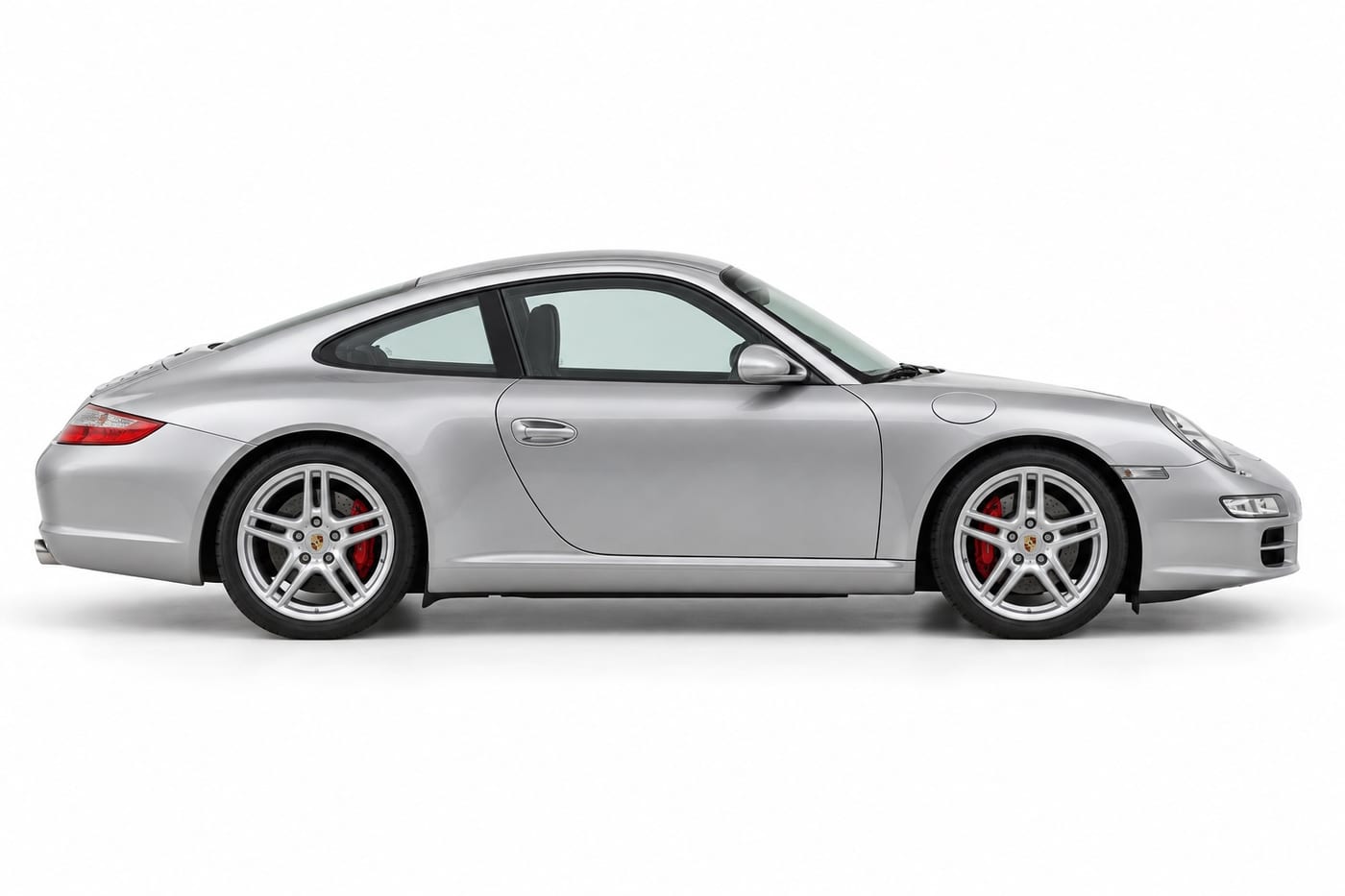
Porsche 997 guide: versions, common faults and buying advice
- Date
- Words
- Enric Godes
The differences that change a Porsche 997 purchase: M96/M97 and MA1 engines, Carrera versus Turbo/GT, diagnosis and deferred costs.
Porsche 997, the reference profile for this generation.
The Porsche 997 restored round headlights and refined the 996 platform, but the range covers different mechanical specifications. The first series uses M96/M97 engines in the Carrera and the Mezger architecture in Turbo and GT models; the 997.2 update introduces direct injection, MA1 engines and PDK in the regular road models. That distinction matters more in the workshop than a bumper change.
A well-kept car is still fast, compact and easy to use. It can also cause a substantial repair bill if oil consumption has been treated as normal, gearbox service has been omitted, or it has been prepared for track use without documenting it. The inspection must assess the car as a complete system: engine, cooling, transmission, brakes, suspension, body and operating data.
The goal of the guide is to decide which version is best for your use and what to measure before negotiating a purchase. IMS and bore scoring deserve attention, but they do not replace checking for knocks, localized corrosion, radiators, clutch, PDK, PASM or the specific Turbo and GT elements.
Porsche 997 at a glance
- Years
- 2004-2012
- Body styles
- Coupé, Cabriolet and Targa
- Engine
- Six-cylinder boxer, 3,6-4,0 l; naturally aspirated or twin-turbo
- Power
- 325-620 CV according to European version
- Transmission
- Manual, Tiptronic in 997.1 or PDK in 997.2
- Production
- Approximately 213.000 units
Which Porsche 997 should you choose?
Carrera 997.1
Since 2004, with 3,6 litres and 325 CV; the Carrera S uses 3,8 litres and 355 CV. The 3,8 deserves a particularly careful check of cylinders and oil consumption.
Carrera 997.2
Since 2008, direct injection engines with 345 CV in Carrera and 385 CV in Carrera S. The sealed IMS of the previous design disappears and PDK and revised electronics arrive.
Carrera 4, 4S and Targa
They add all-wheel drive; Targa features a glass roof and tailgate. Purchase must include equivalent tyres, silent transmission, and full functioning roof, drains, and sunshade.
Turbo
The 997.1 Turbo offers 480 CV with a Mezger engine; the 997.2 goes to direct injection and 500 CV, with Turbo S of 530 CV. Pipes, turbo geometry, brakes and transmission require their own budget.
GT3 and GT3 RS
From 415 CV in the GT3 3.6 to 450 CV in the RS 4.0. Hours, over revs, track usage, brakes, cage and specific parts must match the history and factory settings.
GT2 and GT2 RS
Rear propulsion and twin-turbo engine, with 530 CV in GT2 and 620 CV in GT2 RS. In these units authentication and a professional structural measurement are not optional.
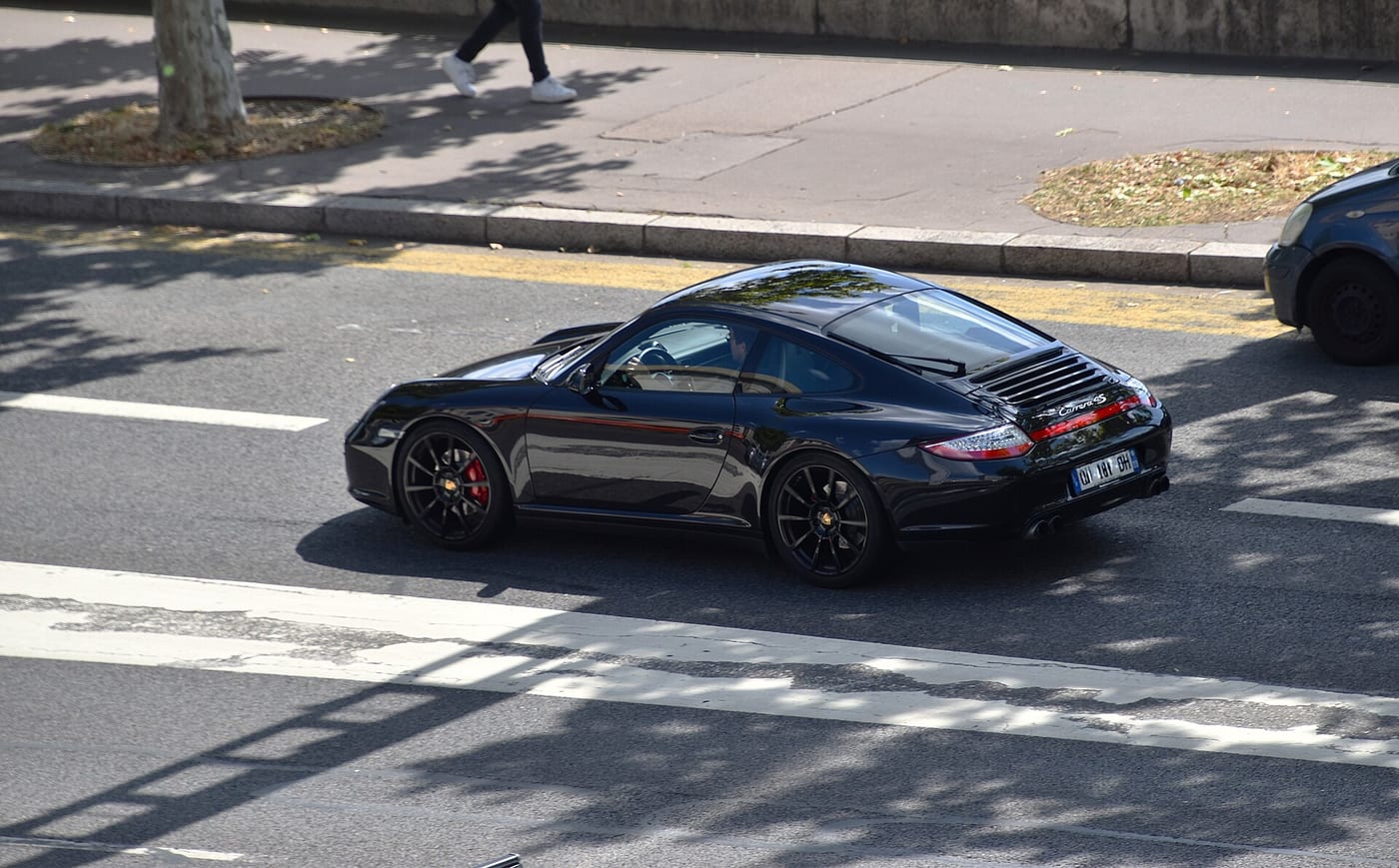
Porsche 911 from the 997 generation. Photo: Charles from Port Chester, New York, CC0, via Wikimedia Commons.

What should you check before buying a Porsche 997?
Please confirm whether it is 997.1 or 997.2 by model year, VIN and engine code, not exterior parts. A car can have updated rear lights or PCM without having changed its architecture. Also check relevant options like PASM, differential, ceramic brakes, Sport Chrono and seats.
In Carrera 997.1, he inspects the filter and oil, records consumption and performs a borescope if the history, symptoms or the engine advise it. Marked soot on an exhaust, hot knocking and one-sided smoke raise the suspicion of bore scoring, especially on the 3.8.
Establish which IMS bearing is fitted to the early engines, but do not base a purchase solely on an invoice for its replacement. Check the part used, who installed it and what was inspected. Many later 997.1 models have a larger-diameter bearing that cannot be removed in the same way without opening the engine.
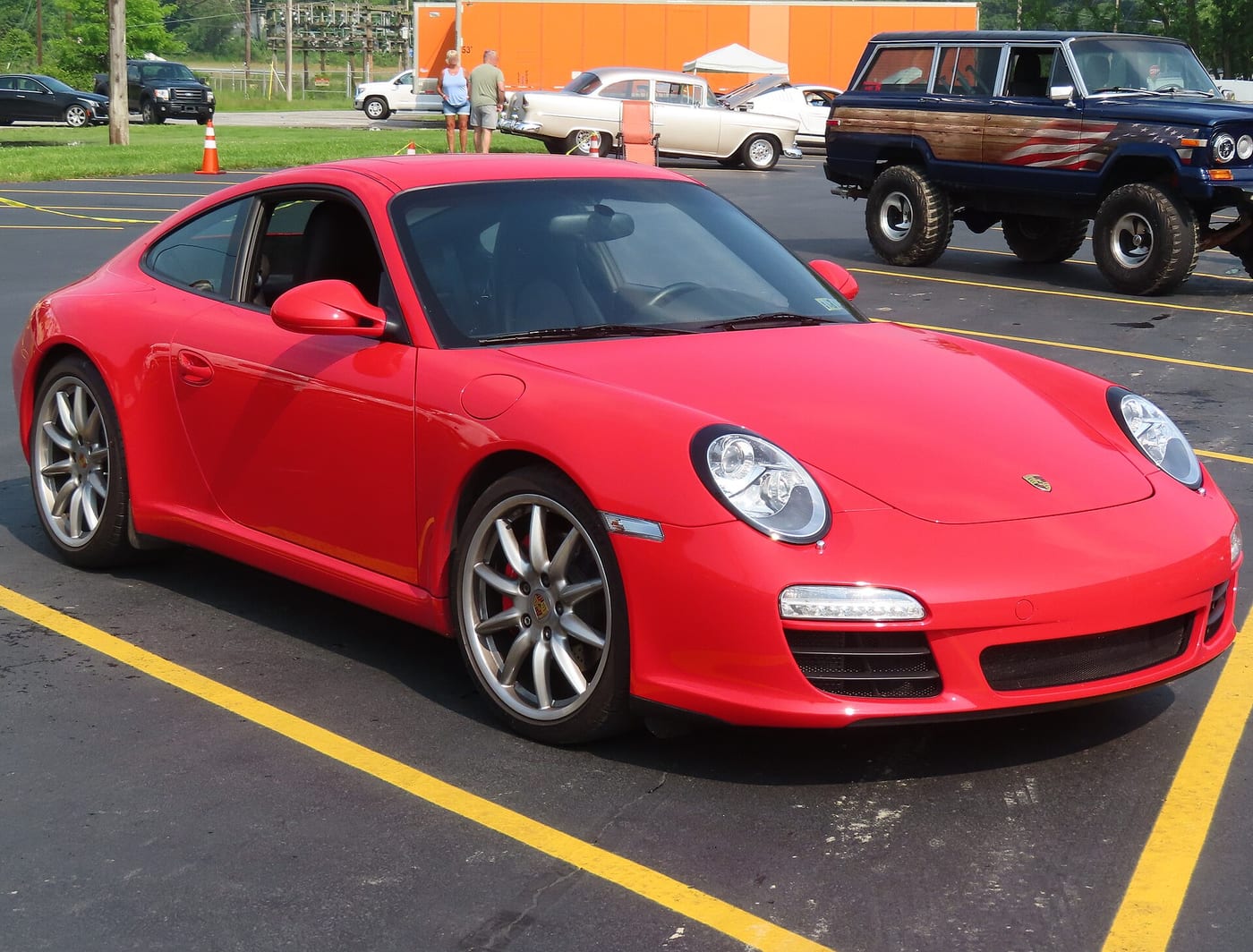
Porsche 911 from the 997 generation. Photo: MercurySable99, CC BY-SA 4.0, via Wikimedia Commons.

Read over-rev events hours and ranges, stored faults, ignition counters and adaptations. Relate them to mileage, clutch and wear. A recent high-ranking event, or data deleted without explanation, warrants further testing before deciding.
Check the front underneath, radiators, condensers, pump, thermostat and coolant traces. In Turbo/GT it examines cooling and oil pipe joints, supercharging, exhausts and any increase in power. A reprogram changes the thermal load and history reading.
Try PDK or Tiptronic with the engine cold and warm, slow maneuvers and moderate full load. On manual models, look at the clutch, synchronizers and flywheel. Evaluates PASM, dynamic mounts, front-axle lift, PCCB and centre-lock wheels with appropriate tools and procedures.
Known Porsche 997 faults
Bore scoring in Carrera 997.1
Scratches are not diagnosed by reputation nor are they ruled out because the car runs well. Oil consumption, hot ticking noise, uneven soot and marks seen from the correct angle make up the set of symptoms. If it progresses, it increases slack, pollution and the cost of reconstruction.
IMS and leaks in M96/M97
The first Carrera retain IMS bearings and may have leaks from RMS or other nearby joints. Each configuration requires a different procedure. A stain between the engine and gearbox must be cleaned and located before attributing it to the seal or deciding to dismantle it.
Cooling system and water pump
Frequently active fans, fluctuating temperature, sweet smell or dry residue require pressure testing and cleaning the front cooling pack. A circuit that loses thermal capacity increases the risk to the engine, gearbox and air conditioning, although the indicator still does not signal an alarm.
PDK, Tiptronic and manual gearbox
Knocking when selecting, shaking clutches, skipping gear or slow synchronization are different symptoms. The diagnosis should include wear and temperature values when available. Driving until the gearbox goes into emergency limits repair options.
PASM, mounts and running gear
Wet shock absorber, PASM warning, bouncing or imprecise support changes indicate that one geometry is not enough. Arms, bushings, engine mounts and tyres are evaluated together. On dynamic engine mounts, the fault may be registered before it is evident when driving.
Turbo and GT: pipework and hard use
Coolant joint leaks, fatigued actuators, exhaust cracks or overheated brakes have quick consequences under load. Also check the underside of the body, support points and over-rev. A well-maintained track car may be better than a road car with a sketchy history, but it has to be proven.
These are the workshop areas that step in once the diagnosis confirms it: bore scoring, IMS repair, gearboxes and engines.
How is a Porsche 997 serviced?
Maintain an annual inspection with oil and filter, even below the official mileage, if short or seasonal use predominates. Opening the filter and recording consumption provides historical information. Do not change viscosity to hide noise or consumption without diagnosing the cause.
Complete service includes spark plugs, filters, belt, coils, cooling, brakes and underbody. In direct injection engines, add attention to injectors, fuel pressure and intake deposits when there are failures or loss of performance.
Respect scheduled servicing of PDK, Tiptronic, differentials and all-wheel drive system. Check the clutch and linkage on manual models. After renewing suspension or tyres, adjust geometry according to version and use, not with a generic value for all 997 models.
Clean the radiator-condenser package, renew brake fluid and check tyre age. At PCCB, you measure status with the proper method and avoid judging by appearance alone. For the circuit, it reduces intervals and records temperatures, pads and tightening torques.
The 911 servicing rates give an idea of the scope of each service. The final quote depends on what turns up on the car.
What we have done at Valentín Motors
Documented in the Magazine is an M97 engine taken from 3,8 to 4,0 litres with specific cylinder solutions, a rehabilitation of the 997.1 Turbo and the installation of a nose lift on a 997.1.
There are three examples of different needs: correcting an internal fault, rebuilding a supercharged mechanics and adapting the use without compromising the whole.
Who is a Porsche 997 for?
It suits anyone who wants a compact-feeling 911 with modern equipment and is willing to choose by engine and history. A 997.2 Carrera reduces some of the concerns associated with the 997.1, but cooling, injection, PDK and chassis systems still need attention. The 997.1 can be an excellent purchase if its measurements are sound and the price reflects its maintenance needs.
It is not suitable for those who only accept binary answers about IMS or bore scoring. If you’re looking for a lower cost of entry, compare an inspected 996; if you prioritise more modern cabin and assistance, a 991. Turbo and GT are not simply faster Carrera models: they require appropriate consumables, diagnosis and budget.
Related work
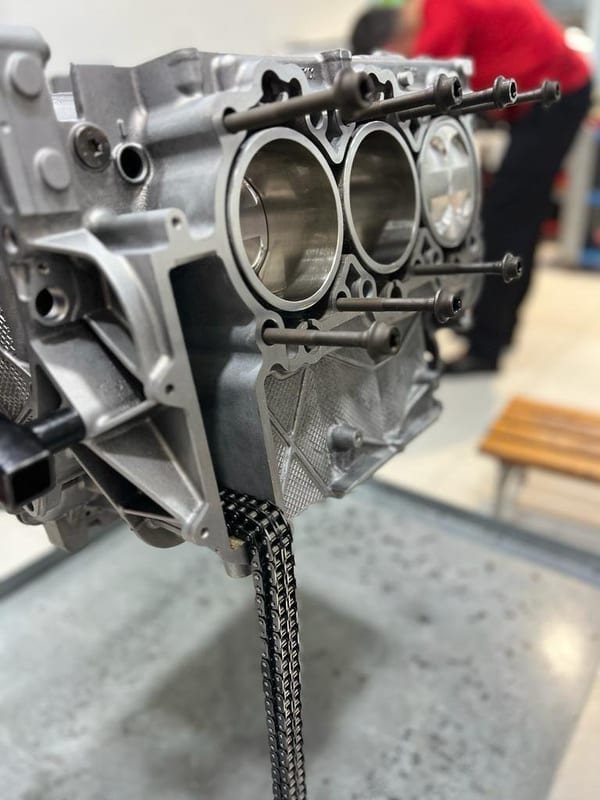
997 M97.01: from 3.8 to 4.0 with Nickies
NSC, the definitive answer to bore scoring, and the chance to increase displacement. Bore scoring affects the M97 engines of the 9
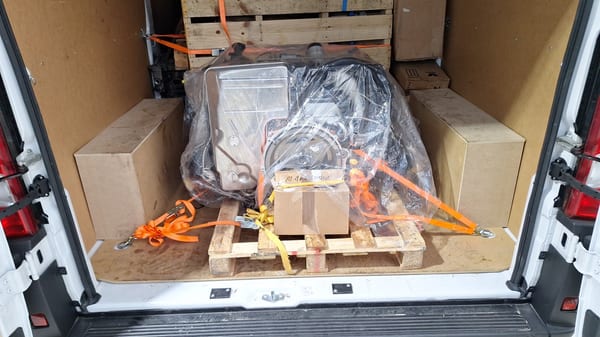
997.1 turbo (Engine rehabilitation due to breakdown)
Engine repair 997.1 turbo
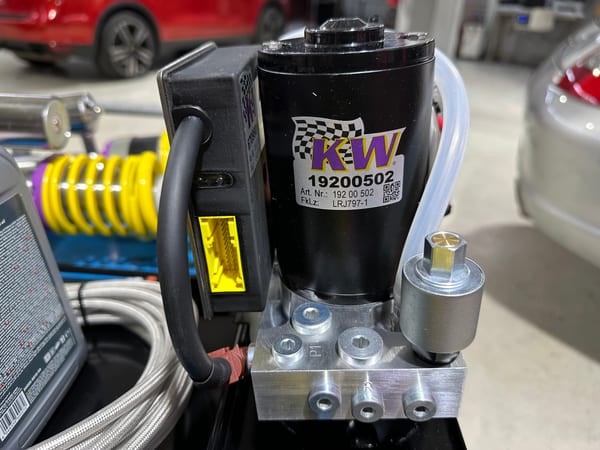
Nose lift system for 997.1 (front axle lift system)
Nose lift front system